• Request More Info
  • Visit
  • Apply
  • Give
  • Request More Info
  • Visit
  • Apply
  • Give

Search

  • A-Z Index
  • Map

History

  • About
    • Why Study History?
    • Areas of Study
    • Faculty Publications
    • The Jangle Podcast
    • Alumni Profiles
    • Contact Us
    • Give
  • People
    • Faculty
    • Teaching Faculty
    • Research Faculty
    • Associated Faculty
    • Staff
    • Graduate Students
    • Emeriti
  • Undergraduate
    • Majors / Minors
    • Declare
    • Honors Program
    • Advising
    • Classes
    • Beyond the Classroom
    • Careers
    • Scholarships & Awards
  • Graduate
    • Concentrations
    • MA Program
    • PhD Program
    • Apply
    • Funding
    • Forms
    • Graduate Handbook
  • Community Engagement
    • Local Histories
    • Summer Bridge Program
    • Bridge to AP U.S. History
    • Papers of Andrew Jackson
    • Tennesseans and War
  • News & Events
    • News
    • Events
    • Public Lecture Series
    • Newsletters
  • Share Your News

Fertile Expectations: The Politics of Involuntary Childlessness in Twentieth-Century France
Fertile Expectations: The Politics of Involuntary Childlessness in Twentieth-Century France

December 2, 2025

topography background

Faculty Publications

fertile-expectations
(Manchester University Press, 2025)
View Publication Page

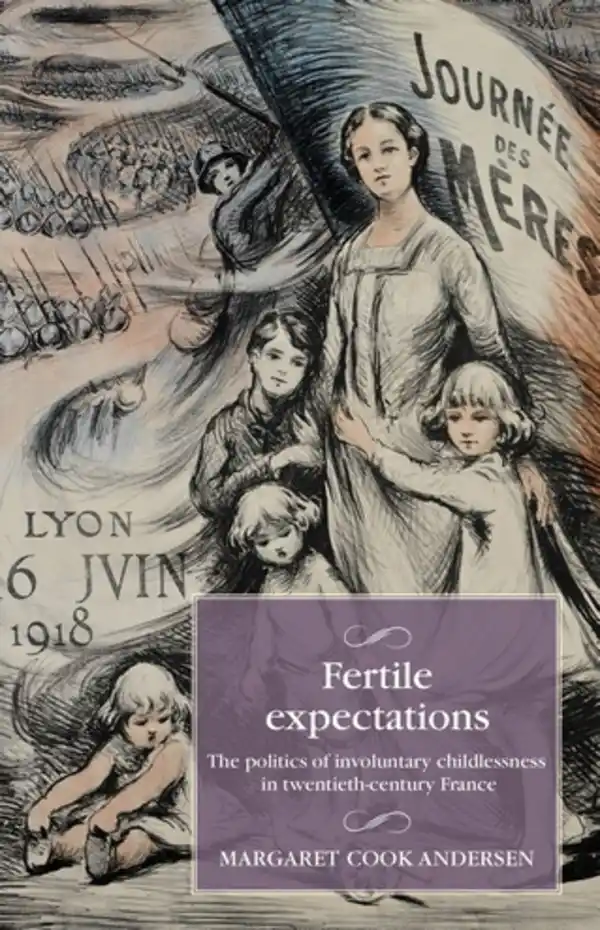
Fertile Expectations: The Politics of Childlessness in Twentieth-Century France

by Margaret Andersen

An engaging history of motherhood, demography, and infertility in twentieth-century France, this book explores fraught political and cultural meanings attached to the notion of an “ideal” family size. When statistics revealed a sustained drop in France’s birthrate, pronatalist activists pushed for financial benefits, propaganda, and punitive measures to counter declining fertility. Situating infertility within this history, the author details innovations in fertility medicine, cultural awareness of artificial insemination, and changing laws on child adoption. These practices offered new ways of responding to infertility and formed part of a growing expectation of being able to control one’s fertility and family size. This book presents the political and cultural context for understanding why private questions about when to start a family, how many children to have, and how to cope with involuntary childlessness, evolved and became part of state demographic policies.

History

College of Arts and Sciences

916 Volunteer Blvd
6th Floor, Stokely Management Center
Knoxville, TN 37996
Phone: 865-974-5421
Email: history@utk.edu


Facebook Icon    X Icon    Instagram Icon    Soundcloud Icon

Department Intranet

The History department has transferred all internal documentation shared by faculty, graduate students, and staff to a Microsoft SharePoint site. Only those with permission may access this area.

The University of Tennessee, Knoxville
Knoxville, Tennessee 37996
865-974-1000

The flagship campus of the University of Tennessee System and partner in the Tennessee Transfer Pathway.

ADA Privacy Safety Title IX