• Request More Info
  • Visit
  • Apply
  • Give
  • Request More Info
  • Visit
  • Apply
  • Give

Search

  • A-Z Index
  • Map

History

  • About
    • Why Study History?
    • Areas of Study
    • Faculty Publications
    • The Jangle Podcast
    • Alumni Profiles
    • Contact Us
    • Give
  • People
    • Faculty
    • Teaching Faculty
    • Research Faculty
    • Associated Faculty
    • Staff
    • Graduate Students
    • Emeriti
  • Undergraduate
    • Majors / Minors
    • Declare
    • Honors Program
    • Advising
    • Classes
    • Beyond the Classroom
    • Careers
    • Scholarships & Awards
  • Graduate
    • Concentrations
    • MA Program
    • PhD Program
    • Apply
    • Funding
    • Forms
    • Graduate Handbook
  • Community Engagement
    • Local Histories
    • Summer Bridge Program
    • Bridge to AP U.S. History
    • Papers of Andrew Jackson
    • Tennesseans and War
  • News & Events
    • News
    • Events
    • Public Lecture Series
    • Newsletters
  • Share Your News

Literate Community in Early Imperial China The Northwestern Frontier in Han Times
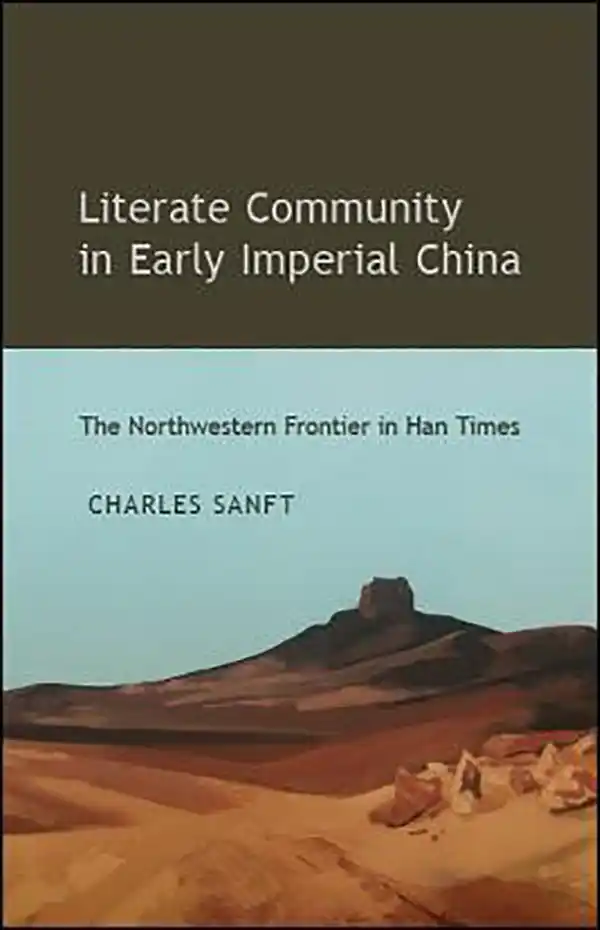
Literate Community in Early Imperial China The Northwestern Frontier in Han Times

November 12, 2023

topography background

Faculty Publications

literate-community-in-early-imperial-china-the-northwestern-frontier-in-han-times
(SUNY Press, 2019)
View Publication Page

Literate Community in Early Imperial China The Northwestern Frontier in Han Times

by Charles Sanft

This book examines ancient written materials from China’s northwestern border regions to offer fresh insights into the role of text in shaping society and culture during the Han period (206/2 BCE–220 CE). Left behind by military installations, these documents—wooden strips and other nontraditional textual materials such as silk—recorded the lives and activities of military personnel and the people around them. Charles Sanft explores their functions and uses by looking at a fascinating array of material, including posted texts on signaling across distances, practical texts on brewing beer and evaluating swords, and letters exchanged by officials working in low rungs of the bureaucracy. By focusing on all members of the community, he argues that a much broader section of early society had meaningful interactions with text than previously believed. This major shift in interpretation challenges long-standing assumptions about the limited range of influence that text and literacy had on culture and society and makes important contributions to early China studies, the study of literacy, and to the global history of non-elites.

History

College of Arts and Sciences

916 Volunteer Blvd
6th Floor, Stokely Management Center
Knoxville, TN 37996
Phone: 865-974-5421
Email: history@utk.edu


Facebook Icon    X Icon    Instagram Icon    Soundcloud Icon

Department Intranet

The History department has transferred all internal documentation shared by faculty, graduate students, and staff to a Microsoft SharePoint site. Only those with permission may access this area.

The University of Tennessee, Knoxville
Knoxville, Tennessee 37996
865-974-1000

The flagship campus of the University of Tennessee System and partner in the Tennessee Transfer Pathway.

ADA Privacy Safety Title IX