Black, Monica
Specialties:
Modern Europe, Modern Germany, especially post 1945.
Phone
Books
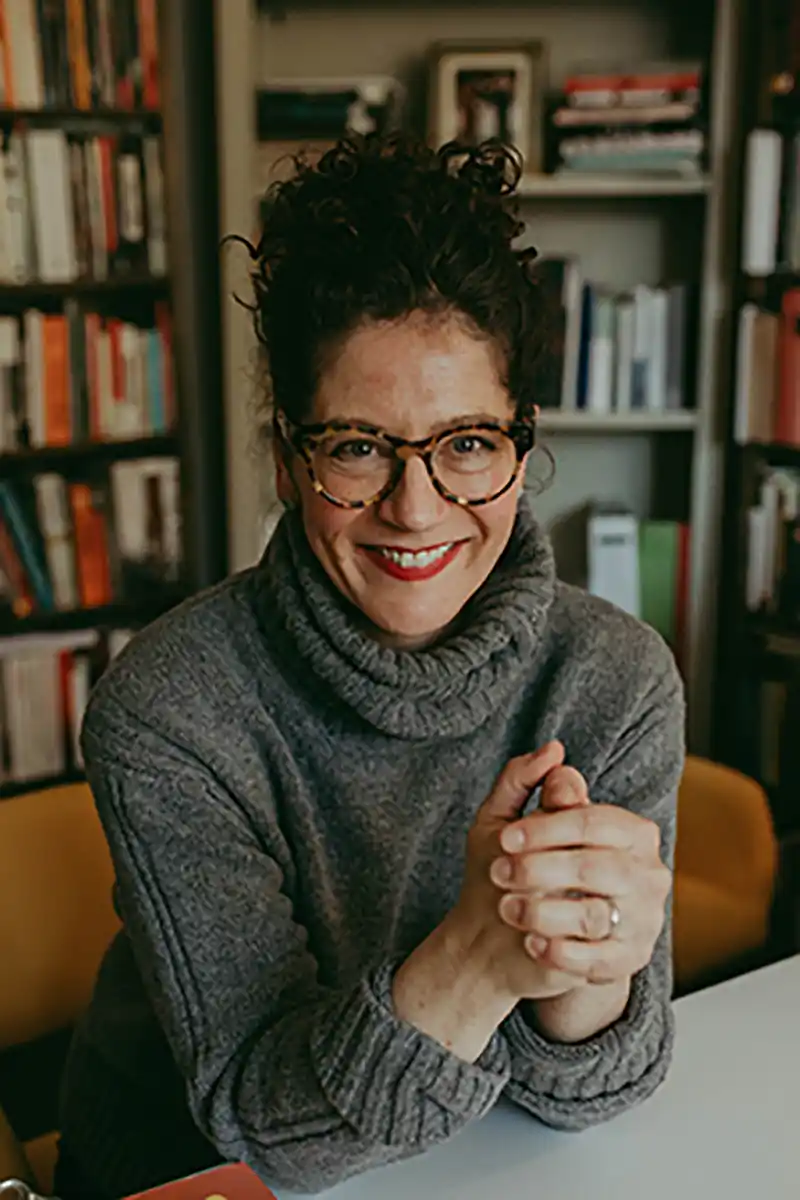
Monica Black
Distinguished Professor in the Humanities | Modern Europe / Germany
I am a historian of the everyday, or what Fernand Braudel called “the little things one hardly notices in time and space.” My work has often focused on the ordinary, the predictable, and the routine: things people in the past did, mostly without reflecting on what they were doing at all. Such things have a lot to tell us about what people valued, assumed, and imagined to be true.
Twentieth-century Germany is the time and place whose evolving sense of the ordinary has held my attention all my scholarly career, and even long before. Throughout the exceptional churn of the country’s history—especially the decades from World War I to the post-World War II period—people in Germany held fast to strong ideas about “normal life,” despite living in patently exceptional times. That fact alone makes 20c Germany a superlative object lesson for today.
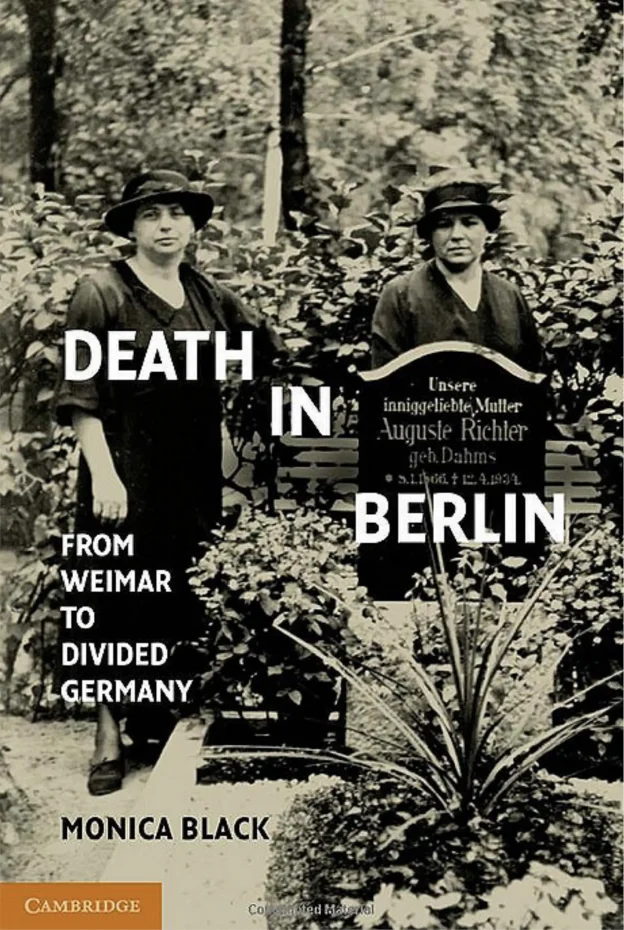
My first book, Death in Berlin: From Weimar to Divided Germany (Cambridge University Press, 2010), looked at how Berliners buried (and sometimes, reburied) their dead in times ordinary and not, from the interwar period to the building of the Berlin Wall. In an era shadowed by the horrors of Nazism, mass death, genocide, and total war, caring for the dead “properly”—meaning, “in a fitting way,” or “in the way we do things”—became a powerful source not only of cultural durability and identity, but also of racial exclusion. Yet while Berliners so often insisted that they were hewing to tradition, the practices of burial were constantly, and of necessity, changing. The material realities of aerial bombardment in an urban environment; mass graves, unmarked graves, coffinless burials; war and defeat, occupation and division: all these affected how the dead could be buried, and equally important, what it meant to bury them.
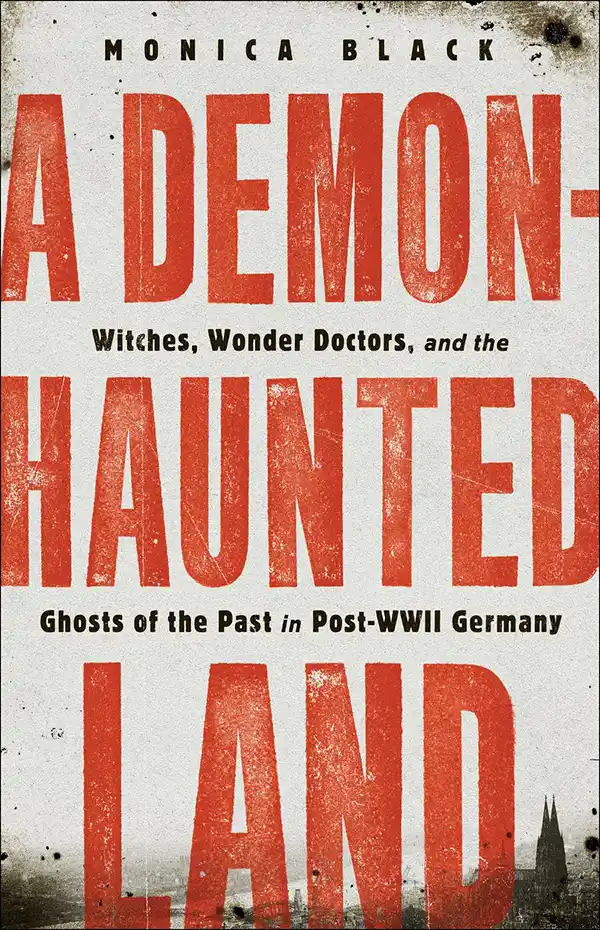
A Demon-Haunted Land: Witches, Wonder Doctors, and the Ghosts of the Past in Post-WWII Germany (Metropolitan Books / Henry Holt, 2020), tells about what came after 1945. In the past, when historians wrote about the Federal Republic of Germany after Nazism and WWII, they depicted a solid trajectory from genocidal dictatorship to liberal democracy. There was always something uncanny about that story: how does a country enthralled to Adolf Hitler return to normalcy? What was normal after Nazism and the Holocaust? A Demon-Haunted Land offers a kind of shadow history, or maybe a CAT scan, of a deeply damaged society consumed by shame, guilt, bitterness, and toxic mistrust—less a smooth transition than a country convulsed by apocalyptic visions, incurable maladies, divine apparitions, messianic healers, and accusations of witchcraft.
Death in Berlin was awarded the Fraenkel Prize (2010) and the Hans Rosenberg Prize (2010). It was based on my dissertation, which won the Fritz Stern Prize (2007). A Demon-Haunted Land has been translated and published in Dutch, German, Polish, Russian, Chinese (complex characters), and Portuguese. It is forthcoming in a second Chinese edition (simplified characters) and in Ukrainian. In 2022, Germany’s Office for Political Education (Bundeszentrale für politische Bildung) selected the book for publication in a special edition to promote civic education in the Federal Republic.
The book I am writing now is a work of synthesis: a history of environment in Europe and the West since 1500. It’s based on a course I started teaching in 2023, which offered a new way of telling the history of the modern West, one that begins with the Little Ice Age and ends amidst our current crises: endemic pollution, biodiversity decline, and climate change. Drawing on cutting-edge research and classic works, the book is among other things intended as a teaching tool, in that I hope it might inspire fellow college teachers to infuse environment into more familiar forms of historical explanation. The book is under contract with Cambridge University Press in the “New Histories of the Modern World” series (Prasannan Parthasarathi, editor).
In 2014, I was awarded the Berlin Prize by the American Academy in Berlin. The American Council of Learned Societies and the National Endowment for the Humanities have funded my research. I have also been a fellow of Princeton University’s Shelby Cullom Davis Center.
I am editor-in-chief of Oxford Bibliographies, Modern European History (forthcoming). I am an advisory board member of the George L. Mosse Series in the History of European Culture, Sexuality, and Ideas. From 2019 to 2024, I was editor of the journal Central European History, and from 2021 to 2024, a review editor for the American Historical Review. From 2022 to 2024, I served on the executive board of the German Studies Association. From 2021 to 2023, I was Associate Director of the University of Tennessee’s Denbo Humanities Center.
Education
PhD, University of Virginia
BA, University of North Carolina, Chapel Hill