Yıldırım, Duygu
Specialties:
Early Modern Mediterranean, Ottoman Empire, History of Science & Medicine, religion, translation, and cross-cultural interactions.
Books
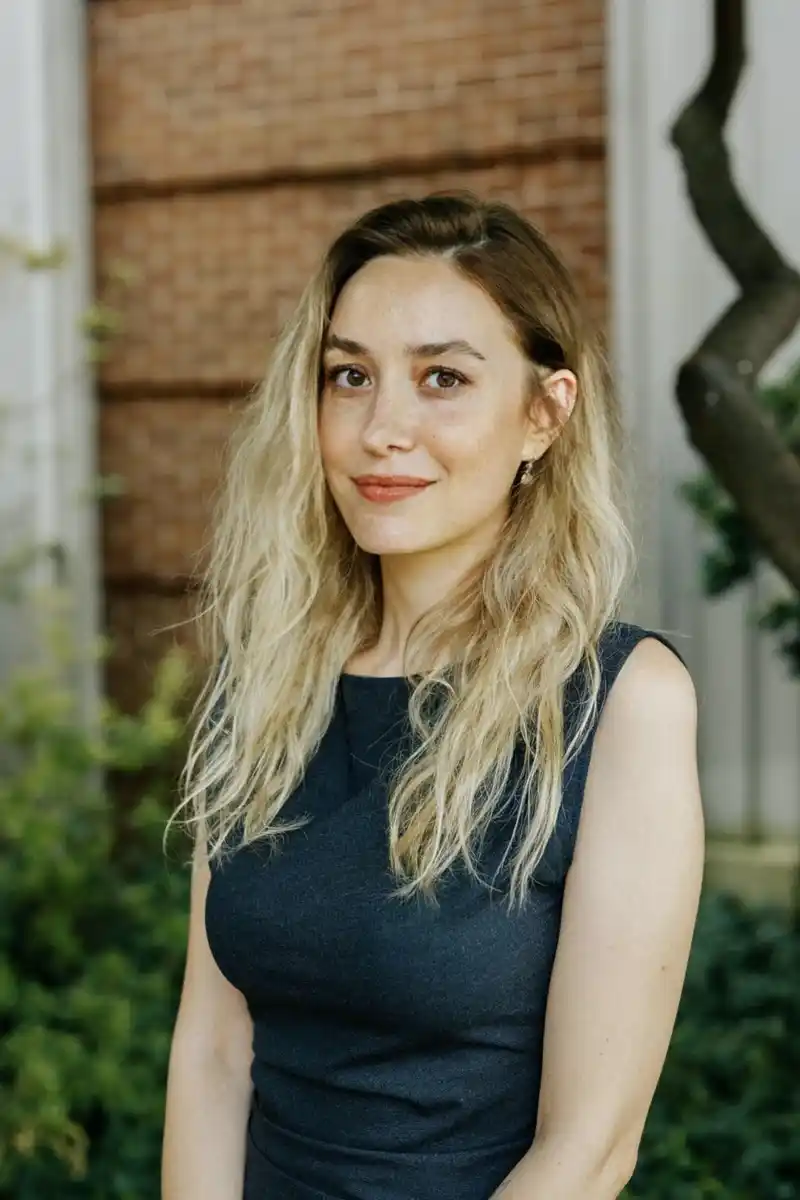
Duygu Yıldırım
Assistant Professor | World History
Duygu Yıldırım (PhD in History, Stanford University) is a historian of science and medicine specialized in the early modern Mediterranean and in the Ottoman Empire. Broadly, her work focuses on cross-cultural interactions, translation, materiality, scientific labor, foodways, critical historiography, and the relationship between knowledge-making and faith.
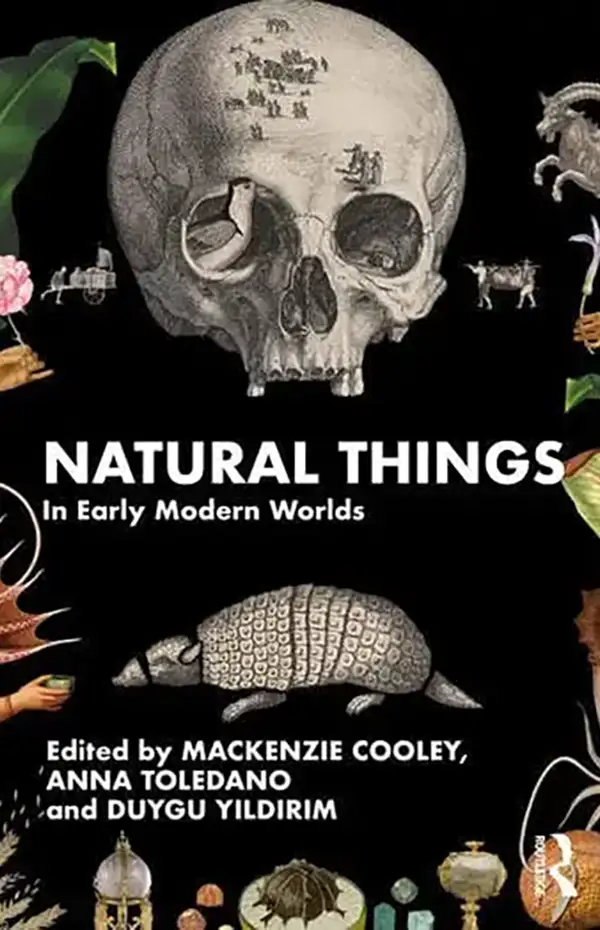
She is currently completing her first monograph, Uncertain Knowledge: The Science of Making Relevance between the Ottoman Empire and Early Modern Europe in which she traces the histories of uncertainty in the making of botanical and medicinal knowledge. She is the co-editor of Natural Things in Early Modern Worlds (Routledge, 2023), which shows how natural things obtained new meanings and became alienated from their origins during the rise of modern life sciences.
Her research and writing have been funded by the American Council of Learned Societies (ACLS), Dan David Prize Scholarship, Social Science Research Council, Renaissance Society of America, Stanford’s Center for Spatial and Textual Analysis (CESTA), and Stanford Humanities Center, among many others. Prior to joining UTK, she was a Max Weber Postdoctoral Fellow at the European University Institute in Florence, Italy.
In spring 2026, she will be a Berenson Fellow at I Tatti, Harvard University Center for Italian Renaissance Studies in Florence.
Selected Publications
Books
Mackenzie Cooley, Anna Toledano, and Duygu Yıldırım, eds. Natural Things in Early Modern Worlds (London & New York, NY: Routledge, 2023).
Peer-reviewed articles
“The Translating Subject: Self-Assertion and Edges of Mediation in Ali Ufkî’s Bilingual Dialogues.” Journal of Early Modern History 28 (2024): 415–34. https://doi.org/10.1163/15700658-bja10095
“Back to the Future: A Belated History of ‘New’ Science in the Ottoman Empire.” British Journal for the History of Science – Themes 9 (2024): 169–82. doi:10.1017/bjt.2024.9
“Ottoman Plants, Nature Studies, and the Attentiveness of Translational Labor,” History of Science 61 no 4 (2023): 497–521. https://doi.org/10.1177/00732753231191340.
“(Un)Making Labor Invisible: A Syllabus,” with Patrick Anthony, Juliana Broad, Xan Chacko, Zachary Dorner, and Judith Kaplan, History of Science 61 no 4 (2023): 608–24. https://doi.org/10.1177/00732753231180954
“Comparing Faiths: The Making of Religious Dialogue between the Ottoman Empire and Early Modern Europe,” History of Religions 63 no 2 (2023): 198-227. https://doi.org/10.1086/726716.
“Bevanda asiatica: Scholarly Exchange between the Ottomans and Europeans on Coffee,” Journal of Ottoman Studies 56 (2020): 25-48.
- Honorable Mention, FEEGI (The Forum on Early-Modern Empires and Global Interactions) Article Prize, 2021.
Courses Taught
HIST 585: Science, Medicine, and Technology in the Middle East
HIME 384: Food, Health, and Society
HIST 262: World Civilization 1500-Present
HIME 384: Ottomans and the World, 1300-1800
Education
Ph.D. Stanford University, 2021