

Phillips Awarded Lindsay Young Professorship
Denise Phillips, associate professor, associate head, and director of undergraduate studies in the UT Department of History, has been awarded a Lindsay Young Professorship.
Phillips’s research specializes in European history, specifically the history of science, agriculture expertise, and 18th and 19th-century Germany and Switzerland. Her first book, Acolytes of Nature: Science and Public Culture in Germany, was published in 2012, exploring social history and how the term “science” came to have a new meaning in Germany between 1770 and 1850.
She has also worked on numerous publications and journals. Most recently she co-authored “Roundtable: Integrating Environment and Empire in German History,” for German Studies Review, published in February 2025. Her work has been supported by the Fulbright Commission, the German Academic Exchange Service, the National Science Foundation and the Fritz Thyssen Foundation.
Phillips is currently working on her next book, which will focus on Jacob Guyer (also known as Kleinjogg), an 18th-century Swiss peasant described as a philosophical farmer and innovator of rural knowledge.
Established in 1980 by Knoxville lawyer Lindsay Young, these endowed professorships reward faculty who are outstanding teachers, researchers, and public servants. Ten awards are made each year: one in law, one in veterinary medicine, and eight in the humanities. This professorship will support Phillips in her pursuit of research on European history and influential trends in agricultural, intellectual, scientific history.
by Sloan Docekal

Olsson Awarded Lindsay Young Professorship

Tore Olsson, professor in the UT Department of History, has been awarded a Lindsay Young Professorship.
Olsson’s work focuses on the history of the United States after the Civil War, specifically centering on popular culture, political economy, environment and food history, and the U.S. South. He explores video games and how they can open windows to social and political history. His most recent book, Red Dead’s History: A Video Game, an Obsession, and America’s Violent Past, was published in 2024. It focuses on the Red Dead Redemption video games, drawing on the plot and characters to explore issues of capitalism and race in the U.S. after the Civil War. He taught an undergraduate class on this subject, aiming to make history understandable and relevant to diverse audiences.
Olsson has received support from the National Endowment for the Humanities, the Social Science Research Council, the Society for Historians of American Foreign Relations, and other funding organizations. His work has also been featured in popular outlets such as the Wall Street Journal and The History Channel.
He developed a new course titled “Grand Theft America: U.S. History since 1980 through the GTA Video Games,” in which students examine the last half-century of American history through the lens of the popular Grand Theft Auto video games. He received the UT Alumni Association’s Outstanding Teacher Award in part for his work on this class.
Established in 1980 by Knoxville lawyer Lindsay Young, these endowed professorships reward faculty who are outstanding teachers, researchers, and public servants. Ten awards are made each year: one in law, one in veterinary medicine, and eight in the humanities. This professorship will help Olsson continue to make U.S. social and political history accessible and applicable to all.
by Sloan Docekal

Woods Named Distinguished Professor in Humanities

Michael Woods, professor in the UT Department of History, has been named a Distinguished Professor in Humanities. Woods has been on faculty at the University of Tennessee, Knoxville, since August of 2020, and also serves as the director of the Andrew Jackson Papers.
Woods’ research focuses on the early republic and antebellum U.S. Civil War era. He has conducted extensive research on the political and cultural landscape of the 19th-century United States, particularly the partisanship, slavery, and sectionalism. His most recent book, Arguing until Doomsday: Stephen Douglas, Jefferson Davis, and the Struggle for American Democracy, was published in 2020. It analyzes the conflict between the two democrats and how they influenced the antebellum Democratic party in the mid-1850s.
The Papers of Andrew Jackson, directed by Woods, is a project sponsored by the College of Arts and Sciences, aiming to collect and publish all of Jackson’s literary works. This project has received multiple grants, including from the National Endowment for the Humanities, the National Historical Publications and Records Commission, the Tennessee Historical Commission, and the Tennessee Historical Society, and has produced 12 volumes so far.
Woods also recently completed a book-length study of John H. Van Evrie, a mid-19th century proslavery writer, titled The Business of Bigotry: John Van Evrie’s Nineteenth-Century Racist Media Empire which will be released by the University of North Carolina Press in September 2026. He teaches undergraduate courses on his specialties as well.
Distinguished Professors in Humanities at UT are faculty recognized for their exceptional contributions to teaching, research, and academia who demonstrate academic excellence, leadership, and a significant impact on their field of study. Understanding the partisanship and conflict of the antebellum U.S. Civil War era and its impact on our culture now is made easier by Woods’ continuous commitment to his study.
by Sloan Docekal
How out‑of‑work fishermen saved the American Revolution
Christopher Magra, University of Tennessee
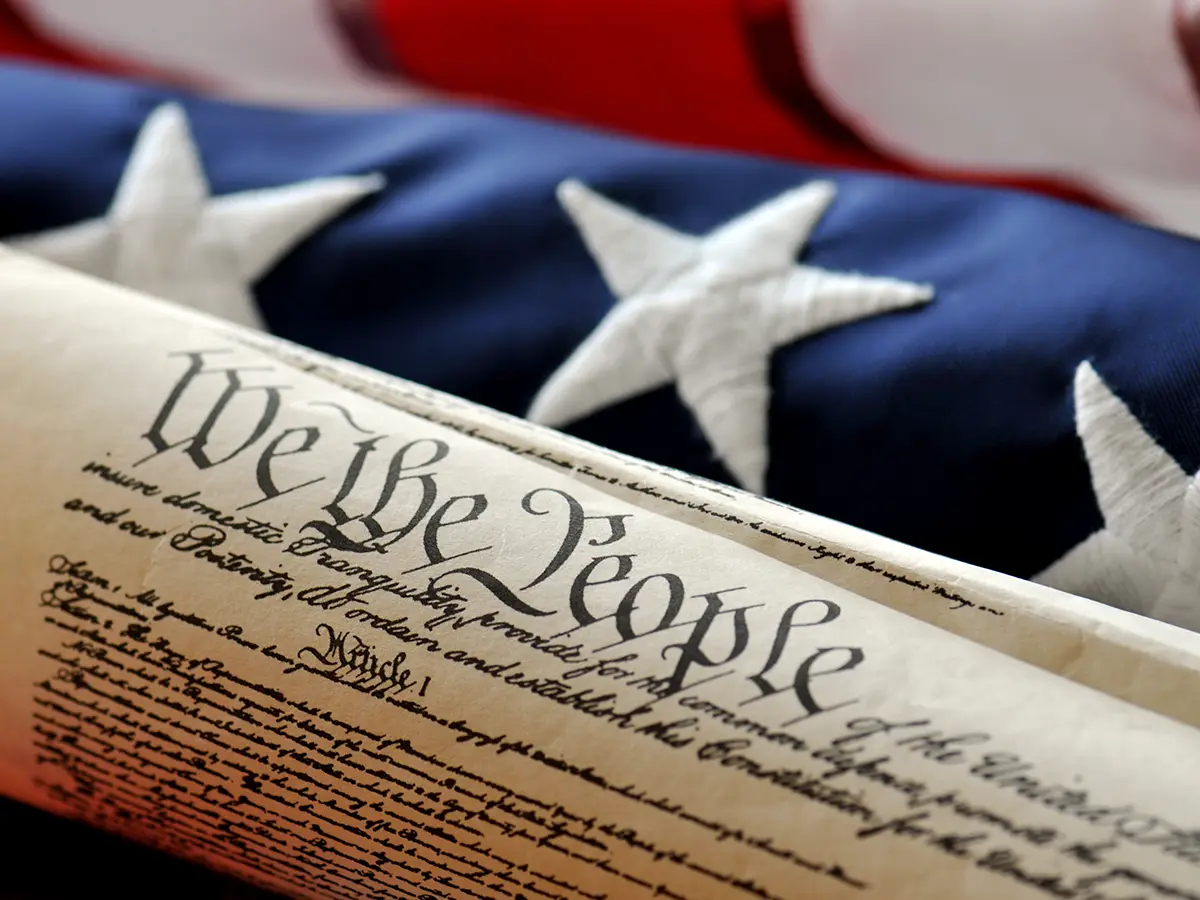
George Washington knew his forces could not win the American Revolutionary War without some measure of sea power. “It follows then as certain as that night succeeds the day,” he later wrote in a letter, “that without a decisive naval force we can do nothing definitive, and with it everything honorable and glorious.”
The problem was that the American commander did not have a navy.
As a professor of early American history, I have taught courses on the American Revolution for more than 20 years and have written two books on its maritime dimensions. Washington’s solution wouldn’t come from a French shipyard or a congressional committee. It would come from a group of angry, out-of-work New England fishermen.
Supplying the army from the sea
In 1775, American ground forces managed to lay siege to the British army in Boston, but Washington needed provisions and military stores to sustain pressure on this key commercial hub. Looking out across the Atlantic Ocean, he noticed supply ships arriving in droves from Great Britain – unescorted – to supply the British army in Boston with guns and ammunition.
Unbeknownst to them, the British had already handed the American commander the ships and mariners he needed to capture those resources.
The Sons of Liberty, a network of political activists, had angered the British government by resisting taxes and commercial regulations – from the 1765 Stamp Act, which taxed printed documents, to the 1773 Tea Act, which controlled what tea leaves made their way into North American cupboards.
To punish rebels for their treason, Parliament passed the Restraining Act of 1775, banning New Englanders from fishing on the Atlantic Ocean. Overnight, thousands of skilled mariners – men who spent their lives wrestling 100-pound cod out of the freezing, storm-tossed North Atlantic – were out of a job. They weren’t just unemployed; they were furious. These fishermen left their work tools and ships behind, picked up weapons and joined the siege of Boston alongside American farmers.
Ashley Bowen, who lived and worked in Marblehead, Massachusetts, the principal fishing port in America at the time, recorded in his journal on May 22, 1775, “the fishermen are enlisting quite quick.”
A letter from a French diplomat to the foreign minister in Paris confirmed the news a couple of weeks later: “4,800 sailors seeing they were going to be deprived of their fishing rights, deserted their ships and joined their compatriots under arms.”
Creating the first navy
Washington, commissioned by Congress as commander in chief of all American armed forces in June 1775, saw an opportunity. He didn’t wait for Congress to build new frigates. Instead, he reached out to John Glover, a fish merchant from Marblehead and a commissioned officer under his command.
Washington’s plan was simple: Take the sturdy, salt-stained schooners used for fishing and turn them into armed, seagoing predators.
The first of these was Glover’s own fishing vessel and trade ship, Hannah. She wasn’t a formidable man-of-war but a 78-ton workhorse that spent summers at the Grand Banks and winters hauling rum and sugar from the Caribbean. Washington armed the trade ship with a few cannons, manned her with fishermen and sent her out to hijack British supply ships to help his army win the siege of Boston.
Just two days after the Hannah was underway, her crew captured the Unity, a sloop loaded with naval stores and lumber, supplies sorely needed by British forces in Boston.
Between August and October 1775, Washington outfitted a fleet of schooners at Congress’ expense to intercept British supply ships off the coast of New England. These vessels and crews, whose wages were paid by the American government, constituted what many historians consider America’s first navy. Washington reminded each captain that they sailed “at the Continental Expense.” These orders from Washington and the payments made by Congress made these ships official American warships, operating under the authority of what would become the federal government.
These recruits didn’t need nautical training; they were seasoned seafarers who had battled rough waters and gale force winds. On Oct. 13, 1775, George Washington wrote to his brother, John Augustine Washington, that the fishermen were “soldiers … who have been bred to the sea.”
In 1776, Washington informed the governor of Connecticut, who had asked to draft seamen from Washington’s regiments for his own naval expedition, that he could not spare any. “I must depend chiefly upon them for a successful opposition to the Enemy,” Washington explained.
Keeping the Revolution alive
This fleet of converted fishing boats punched above its weight: In the early years of the war they captured 55 British vessels. One such prize, the Nancy, was transporting 2,000 muskets, 30 tons of musket balls and a massive 15-inch brass mortar – supplies the American army desperately needed for the war effort.
Because the British navy was spread too thin, with too few warships available to police the Atlantic coastline, the armed fishing vessels were able to disrupt supply lines and keep the Revolution alive through its infancy. By the time the British realized the threat, the damage was done.
On Feb. 26, 1776, just a few months after Washington launched his fleet, British Admiral Molyneux Shuldham wrote in a report to his superiors that his forces in Boston were low on everything from naval supplies to weapons. What little they could find had to be purchased “at the most extravagant prices.”
The British government had not assigned military convoys to trans-Atlantic shipments at the start of the conflict in 1775. Now, Shuldham recommended arming the supply ships themselves, since valuable stores were being intercepted by rebels in small vessels, “however attentive our Officers to their Duty.”
He concluded the report with an ominous note, explaining that he simply did not have the resources to do everything that was being asked of him – support the army, blockade rebel ports and protect British ships bound for Boston: “I must beg leave to observe to you the very few Ships I am provided with to enable Me to Co-operate with the Army, Cruize off the Ports of the Rebels to prevent their receiving Supplies, or protect those destined to this place from falling into their hands.”
This article’s main image caption has been updated to use a broader term for the vessels shown.
Christopher Magra, Professor of American History, University of Tennessee
This article is republished from The Conversation under a Creative Commons license. Read the original article.

Supreme Court ruling: The latest in history of diminishing minority voting rights
Robert D. Bland, University of Tennessee
Divided along ideological lines, the U.S. Supreme Court on April 29, 2026, issued a ruling that severely weakens a provision of the landmark Voting Rights Act of 1965. That provision, known as Section 2, prohibited any discriminatory voting practice or election rule that results in less opportunity for minority groups to exercise their political clout.
In her dissent on the ruling, Justice Elena Kagan wrote that it is the “latest chapter in the majority’s now-completed demolition of the Voting Rights Act.”
The decision in the case known as Louisiana v. Callais struck down a Louisiana voting district drawn to consolidate Black voters into a district where they would be the majority. The court’s conservative majority deemed the drawing of the district an unconstitutional gerrymander.
That, wrote Kagan, will “systematically dilute minority citizens’ voting power.”
I’m a historian of racial formation and electoral and cultural politics in the U.S. I see this decision by the nation’s highest court as the latest in a long line of successful attempts, by both state and federal authorities, to limit the political power of Black Americans and, most recently, to reverse the gains they won in two periods of civil rights advancement.
Etching away at voting rights
Back in 2013, the Supreme Court tossed out a key provision of the Voting Rights Act regarding federal oversight of elections.
In the Louisiana v. Callais case, the court seemed ready to abolish Section 2 of the Voting Rights Act.
While the conservative majority in Louisiana v. Callais did not explicitly strike down Section 2, the ruling appears likely to nonetheless open the floodgates for widespread vote dilution by allowing primarily Southern state legislatures to redraw political districts, weakening the voting power of racial minorities.
The case was brought by a group of Louisiana citizens who declared that the federal mandate under Section 2 to draw a second majority-Black district violated the equal protection clause of the 14th Amendment and thus served as an unconstitutional act of racial gerrymandering.
Initially designed to enshrine federal civil rights protections for freed people facing a battery of discriminatory “Black Codes” in the postbellum South, the 14th Amendment’s equal protection clause has been the foundation of the nation’s modern rights-based legal order, ensuring that all U.S. citizens are treated fairly and preventing the government from engaging in explicit discrimination.
The cornerstone of the nation’s “second founding,” the Reconstruction-era amendments to the Constitution, including the 14th Amendment, created the first cohort of Black elected officials.
As I highlight in my new book “Requiem for Reconstruction,” the struggle over the nation’s second founding not only highlights how generational political progress can be reversed but also provides a lens into the specific historical origins of racial gerrymandering in the United States.
Without understanding this history – and the forces that unraveled Reconstruction’s initial promise of greater racial justice – we cannot fully comprehend the roots of those forces that are reshaping our contemporary political landscape in a way that I believe subverts the true intentions of the Constitution.
The long history of gerrymandering
Political gerrymandering, or shaping political boundaries to benefit a particular party, has been considered constitutional since the nation’s 18th-century founding, but racial gerrymandering is a practice with roots in the post-Civil War era.
Expanding beyond the practice of redrawing district lines after each decennial census, late 19th-century Democratic state legislatures built on the earlier cartographic practice to create a litany of so-called Black districts across the postbellum South.
The nation’s first wave of racial gerrymandering emerged as a response to the political gains Southern Black voters made during the administration of President Ulysses S. Grant in the 1870s. Georgia, Alabama, Florida, Mississippi, North Carolina and Louisiana all elected Black congressmen during that decade. During the 42nd Congress, which met from 1871 to 1873, South Carolina sent Black men to the House from three of its four districts.
Initially, the white Democrats who ruled the South responded to the rise of Black political power by crafting racist narratives that insinuated that the emergence of Black voters and Black officeholders was a corruption of the proper political order. These attacks often provided a larger cultural pretext for the campaigns of extralegal political violence that terrorized Black voters in the South, assassinated political leaders, and marred the integrity of several of the region’s major elections.
Election changes
Following these pogroms during the 1870s, southern legislatures began seeking legal remedies to make permanent the counterrevolution of “Redemption,” which sought to undo Reconstruction’s advancement of political equality. A generation before the Jim Crow legal order of segregation and discrimination was established, southern political leaders began to disfranchise Black voters through racial gerrymandering.
These newly created Black districts gained notoriety for their cartographic absurdity. In Mississippi, a shoestring-shaped district was created to snake and swerve alongside the state’s famous river. North Carolina created the “Black Second” to concentrate its African American voters to a single district. Alabama’s “Black Fourth” did similar work, leaving African American voters only one possible district in which they could affect the outcome in the state’s central Black Belt.
South Carolina’s “Black Seventh” was perhaps the most notorious of these acts of Reconstruction-era gerrymandering. The district “sliced through county lines and ducked around Charleston back alleys” – anticipating the current trend of sophisticated, computer-targeted political redistricting.
Possessing 30,000 more voters than the next largest congressional district in the state, South Carolina’s Seventh District radically transformed the state’s political landscape by making it impossible for its Black-majority to exercise any influence on national politics, except for the single racially gerrymandered district.
Although federal courts during the late 19th century remained painfully silent on the constitutionality of these antidemocratic measures, contemporary observers saw these redistricting efforts as more than a simple act of seeking partisan advantage.
“It was the high-water mark of political ingenuity coupled with rascality, and the merits of its appellation,” observed one Black congressman who represented South Carolina’s 7th District.
Racial gerrymandering in recent times
The political gains of the Civil Rights Movement of the 1950s and 1960s, sometimes called the “Second Reconstruction,” were made tangible by the 1965 Voting Rights Act. The law revived the postbellum 15th Amendment, which prevented states from creating voting restrictions based on race. That amendment had been made a dead letter by Jim Crow state legislatures and an acquiescent Supreme Court.
In contrast to the post-Civil War struggle, the Second Reconstruction had the firm support of the federal courts. The Supreme Court affirmed the principal of “one person, one vote” in its 1962 Baker v. Carr and 1964 Reynolds v. Sims decisions – upending the Solid South’s landscape of political districts that had long been marked by sparsely populated Democratic districts controlled by rural elites.
The Voting Rights Act gave the federal government oversight over any changes in voting policy that might affect historically marginalized groups. Since passage of the 1965 law and its subsequent revisions, racial gerrymandering has largely served the purpose of creating districts that preserve and amplify the political representation of historically marginalized groups.
This generational work is being undone by the current Supreme Court with its ruling in Louisiana v. Callais.
This is an updated version of an article originally published on Feb 3, 2026.
Robert D. Bland, Assistant Professor of History and Africana Studies, University of Tennessee
This article is republished from The Conversation under a Creative Commons license. Read the original article.

1776’s Declaration of Independence inspired Washington’s troops to fight against the odds – and also helped bring in powerful allies
Christopher Magra, University of TennesseeA crowd gathered along the waterfront in New York City in the summer of 1776. The scene they witnessed was terrifying.
The largest expeditionary force in British history sailed into the American harbor. Over 300 ships brought 32,000 professional soldiers and Hessian mercenaries to crush a rebellion.
Nearby, Gen. George Washington’s army gathered to hear their commander read a document that would forever change the nature of their fight: the Declaration of Independence.
And contrary to how Americans now think of that document – as an inspiring declaration that detailed the grievances of Colonists against the British king and announced their independence from Great Britain – what Washington read to his army was also something else.
The Declaration of Independence was America’s first formal declaration of war. It planted a symbolic flag for Patriots to rally around. It transformed illegitimate rebels without hope of foreign aid into state-sponsored freedom fighters eligible for military alliances.
This foundational American text wasn’t just a philosophical breakup letter but a strategic move to secure vital support for the American war effort. America’s first declaration of war was a high-stakes geopolitical gamble essential to achieving independence.
Converting rebels into soldiers
As I and other military historians show in our forthcoming collection of essays, “America’s First War: The Military History of the Declaration of Independence,” the declaration was written within the confines of 18th-century legal standards that strictly governed diplomacy and warfare.
Thomas Jefferson, the foremost writer of the declaration, relied heavily on the Swiss jurist Emer de Vattel’s 1758 treatise “The Law of Nations.” Vattel stressed the fact that in the eyes of European courts, providing aid to rebels was a violation of sovereignty and a dangerous precedent.
Vattel argued that for foreign powers to intervene legally in conflicts, the oppressed party had to formally declare its independence and assume the status of a state. Jefferson kept Vattel’s treatise open while he was working on the Declaration of Independence to ensure he used the specific terminology required to transform the American rebellion into a just war.
By framing independence as “necessary,” Jefferson was not just waxing philosophical. He was satisfying the legal requirement set out by Vattel that all peaceful avenues for reconciliation had been exhausted, which justified war to the “Powers of the Earth.”
A formal declaration of war, approved by Congress, increased support for the American military here at home. It rallied a divided and wary population. Even as late as 1776, there were Americans who remained fence-sitters, uncertain about the risks of a total break with the British Empire.
The declaration functioned as a public rallying flag that allowed Americans to identify themselves as a legitimate, unified group. Like Thomas Paine’s widely read pamphlet “Common Sense,” the declaration educated the uncommitted on the inescapable necessity of breaking away from the British Empire:
“We hold these truths to be self-evident,” the declaration reads, “that all men are created equal, that they are endowed by their Creator with certain unalienable Rights, that among these are Life, Liberty and the pursuit of Happiness.–That to secure these rights, Governments are instituted among Men, deriving their just powers from the consent of the governed, –That whenever any Form of Government becomes destructive of these ends, it is the Right of the People to alter or to abolish it, and to institute new Government, laying its foundation on such principles and organizing its powers in such form, as to them shall seem most likely to effect their Safety and Happiness.”
By framing the fight in the universal language of the preamble, Jefferson sought to inspire and unite disparate Americans through a shared vision of a better life.
In doing so, he helped transform localized resistance movements into a collective national mission. In the words of the declaration, “But when a long train of abuses and usurpations, pursuing invariably the same Object evinces a design to reduce them under absolute Despotism, it is their right, it is their duty, to throw off such Government, and to provide new Guards for their future security.”
The declaration and the American army
This psychological shift was especially critical for the rank-and-file soldiers in the Continental Army.
That’s why, on July 9, 1776, Washington ordered the declaration to be read to his troops in New York. His aim: to provide a fresh incentive for the coming struggle.
This public address was intended to transform the nature of their service. They were no longer disloyal subjects in rebellion against a legitimate sovereign, but soldiers of a new nation defending their own homeland. Through Jefferson’s words and Washington’s address, the declaration fueled enthusiasm for a new political system and rededicated America’s soldiers to a cause that was not yet won.
Washington told the troops he hoped “this important Event will serve as a fresh incentive to every officer, and soldier, to act with Fidelity and Courage, as knowing that now the peace and safety of his Country depends (under God) solely on the success of our arms.”
America’s first declaration of war bolstered troop morale at a pivotal point in the conflict. The Continental Army was going to square off against the largest expeditionary force in British history in the summer of 1776. And Washington’s troops consisted of approximately 19,000 militiamen.
The British army had the British navy. Washington had only minimal naval support. The arrival of the first waves of Hessian mercenaries, auxiliaries for Britain, in July 1776 only deepened American resolve to seek out their own foreign military allies.
Forging alliances
The declaration helped bring about much-needed support for the American war effort among foreign governments.
The primary strategic target of the declaration was the Bourbon monarchies of France and Spain, Britain’s chief rivals. The Continental Congress understood that the fledgling United States could not withstand British military might without receiving overseas shipments of gold and gunpowder, in addition to warships, sailors and soldiers.
Silas Deane, the Americans’ first secret envoy, arrived in Paris in July 1776 with instructions to procure equipment for an army of 30,000 men and to inquire about a formal alliance once independence was declared.
Working with the French playwright Pierre-Augustin Caron de Beaumarchais, Deane established the shell company Roderigue Hortalez and Co. to funnel secret aid from the French government to America. This clandestine supply chain eventually provided thousands of muskets, field artillery and millions of pounds of gunpowder that made possible the 1777 victory at Saratoga and France’s subsequent formal alliance.
While France provided the bulk of the naval support, Spain’s role was equally critical to the American war effort.
Following the declaration, the Continental Congress intensified its appeals to Spain. Bernardo de Gálvez, the governor of Spanish Louisiana, became a central figure in this secret war. Even before Spain formally entered the war in 1779, Gálvez channeled over $70,000 worth of medicine, weapons and uniforms up the Mississippi River to Pittsburgh and Philadelphia. This southern lifeline kept the American war effort viable in the Western theater and forced the British to maintain a defensive posture on multiple fronts.
Reframing the declaration as a strategic war measure highlights the Founding Fathers’ sophisticated understanding of power.
They recognized that each individual’s “unalienable rights” were a fantasy without the “full Power to levy War, conclude Peace, [and] contract Alliances.” Jefferson and the members of Congress understood that American freedom required support for the war effort at home and abroad.
By transforming a localized insurrection into a state-sponsored homeland defense and an international conflict, the declaration ensured that the American Revolution would not be a mere sound of one hand clapping, but a successful geopolitical struggle that brought about independence.
Christopher Magra, Professor of American History, University of Tennessee
This article is republished from The Conversation under a Creative Commons license. Read the original article.