

Freeberg’s Contributions Continue in Retirement
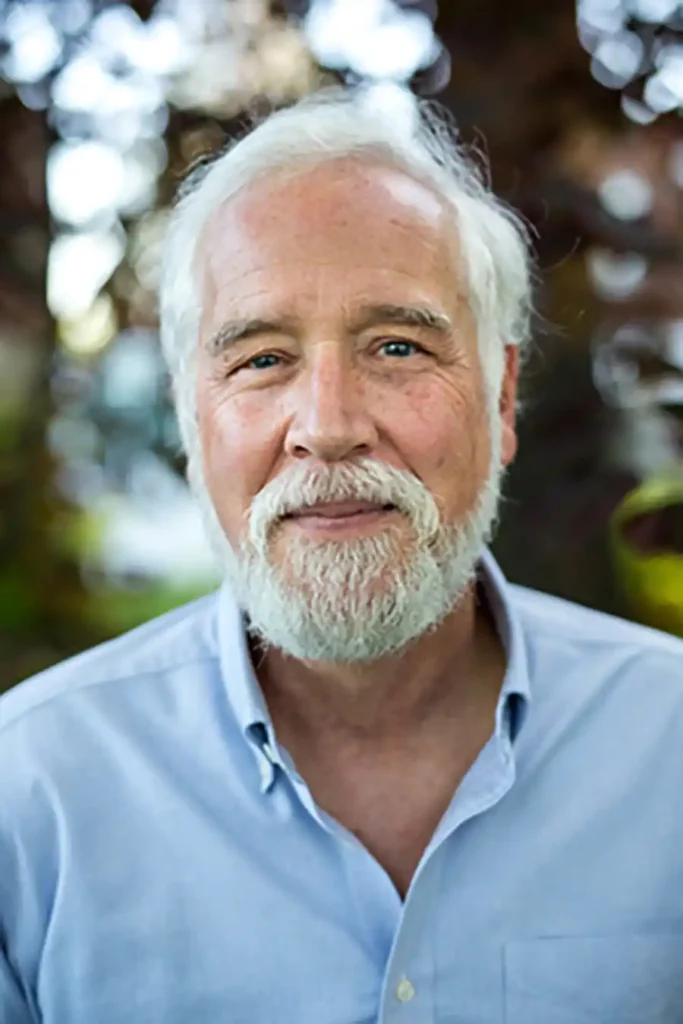
Ernie Freeberg loved working as a journalist for a public radio station in Maine, but his drive to better understand the issues he was covering led to his becoming a historian. For the past 22 years at the University of Tennessee, Knoxville, he has become an award-winning scholar and highly valued educator.
“Being a professor has given me the chance to take a deep dive into some questions that matter to me, and I hope to others, and spend years capturing these ideas in a book—and then translate them into courses that allow me to talk to students about those issues,” Freeberg said. “That’s been a real pleasure and treat and the best reason to do this job.”
While writing his latest book—a cultural history of retirement in America—Freeberg is retiring from UT’s Department of History and returning to Maine.
A Generous Educator
One of Freeberg’s first students at UT in fall 2003 was Glenn Slater (PhD ’12), now head administrator for Covenant Christian School in Conroe, Texas.
“In his own soft spoken and direct manner, he was absolutely the best teacher I could have had starting back in graduate school after a 15-year hiatus from school,” Slater said. “He knew I was stressed and unsure of myself. He often visited with me after classes to check on me. At the same time, he was firm in his grading and let me know when I wasn’t performing well.”
Blake Barton Renfro (’07) still credits the analytical and communication skills learned through Freeberg to his ability now to work on projects such as a strategic plan for a city and a global leadership development program.
“Ernie oversaw my undergraduate honors thesis and spent a lot of time with me and a whiteboard in a room, helping me think about articulating an idea and getting from an idea to the finish line,” Renfro said.
Keith D. Lyon (PhD ’12) calls Freeberg “the best conceivable mentor.”
“His profound intellect, vast knowledge, keen sense of what is historically and culturally meaningful, boundless generosity, and unerring instinct for high quality writing all served my doctoral dissertation, teaching, and development as a scholar immeasurably,” said Lyon, who teaches history at Copiah Lincoln Community College in Mississippi.
Showing Why History Matters
Freeberg structured history courses on central questions such as the role of religion in society.
One of his favorite classes to teach examined the life of radical abolitionist John Brown to consider the question of whether violence is ever acceptable as a way to combat an obvious institutional evil.
“Brown’s life offers a way to explore topics from multiple angles, and when the class puts him on trial at the end, the outcome always comes down to a single vote,” Freeberg said, noting there are good arguments to be made on both sides. “I’m trying to get students to think for themselves, rather than think what I think.”
Leading History Department
Freeberg served as head of the Department of History for nine years, starting in 2013. He was named the 2023 William and Vicki Brakebill College Marshal, the highest honor awarded by the UT College of Arts and Sciences to a faculty member.
Professor Monica Black, who worked closely with him as associate head, called his leadership transformative.
“He consistently advocated with university administration to get opportunities to diversify our faculty and make it more representative of the historical discipline,” she said.
He empowered faculty members to work toward the department’s goals too, she said.
“We made some major revisions to our curriculum to emphasize much more teaching students about historical thinking and historical writing,” Freeberg said. “My main goal, though, was to work with my colleagues to create a collaborative environment where decisions like that were made as a group.”
While he was chair, the department launched a public history course that includes student internships with local historical sites and organizations, taught by Pat Rutenberg. Freeberg also noted Rutenberg’s role in building a bridge program in which faculty members visit Knox County high schools and talk with students in Advanced Placement US History courses. Some students also visit the UT campus for a tour and sample of a college history course.
“Hopefully we recruit some history majors for UT—or for anywhere—out of that process,” Freeberg said.
Going well beyond the history department, Black noted Freeberg’s presence at events across campus. “He was deeply involved in everything and showed the kind of intellectual curiosity that, ideally, faculty model for students,” she said.
Extending UT Expertise
Freeberg has been a master of outreach for the department, across the UT campus and beyond, supporting several partnerships.
Lisa Oakley, vice president and curator of education for the East Tennessee Historical Society met Freeberg in 2003, when she was directing a federal Teaching American History grant and UT’s Department of History was a key partner in training high school teachers.
“We continued to work together once he became department chair, growing the National History Day regional program we co-sponsored,” she said. The annual event brings middle and high school students to campus for a competition, and Department of History faculty and graduate students serve as judges.
“He built on experiences and successful partnerships, always finding new ways to reach out, as well as welcoming ideas from others,” Oakley said.
Freeberg also helped highlight local history. For example, he worked with radio station WUOT on projects such as a podcast series on the 1982 World’s Fair, When the World Came to Knoxville.
About a decade before founding the Knoxville History Project (KHP), Jack Neely met Freeberg while pursuing a story for the alternative weekly Metro Pulse.
“I heard about a remarkable irony: that a learned historian of socialism was living in the former home of the legendary Cas Walker, grocer, radio personality, populist politician, proud of his fourth-grade education, and an avowed enemy of socialism, arguably Knoxville’s leading red-baiter of the ’50s. I called Ernie, and we spent a long time talking in that house,” Neely recalled.
Freeberg later became the first president of the KHP board, a position he served in for several years.
“He was an important consultant and supporter through some very difficult times,” Neely said. “I’m not sure we’d be here without his help.” Neely also has enjoyed long conversations with Freeberg about the topics of the professor’s books. “His knowledge and curiosity are both broad-ranging,” Neely said.
“He’s a thoughtful and distinguished fellow, remarkably modest and soft-spoken, considering all he’s done in his life,” Neely said. “For a nationally respected professor and author, he’s much nicer than he needs to be.”
Connecting Individuals to History
Freeberg’s first book, The Education of Laura Bridgman, won the American Historical Association’s Dunning Prize. Democracy’s Prisoner: Eugene V. Debs, The Great War, and the Right to Dissent was a Los Angeles Times Book Prize finalist and earned two other awards.
“His books are important to history in the scholarly sense, but all of them are accessible and easy to read. That’s a rare combination,” Neely said.
Lyons, who worked with him on The Age of Edison: Electric Light and the Invention of Modern America, lauded Freeberg’s ability to connect the individual with history. “Ernie selects a few individuals who are vital to the theme, thoroughly fleshes them out, weaves the history around them, and explains them in terms of the history,” he said.
Freeberg sees every book as an opportunity to teach himself something new, and in 2020 published A Traitor to His Species: Henry Bergh and the Birth of the Animal Rights Movement.
“Having a historical perspective is hugely important for understanding public issues today, and a number of our faculty are interested in that,” Freeberg said. “We’ve had great success in research that speaks to our academic discipline and contributes to knowledge within the academy, but we also have a number of faculty who are interested in speaking to a wider audience, to help the public understand the value of what we’re doing and to provide some of the tools for people to think historically about the issues we’re facing today.”
Freeberg’s current book project is examining what he describes as an unprecedented moment in American and world history, with millions of people trying to make sense of what to do after retirement.
The first draft is due next year, and Freeberg plans to continue researching and writing. “I have lots of book ideas, so I don’t really think of myself as retiring so much as getting an opportunity to concentrate on writing,” he said.
By Amy Beth Miller


Warning of ‘oligarchy,’ Biden channels Andrew Jackson
Daniel Feller, University of Tennessee
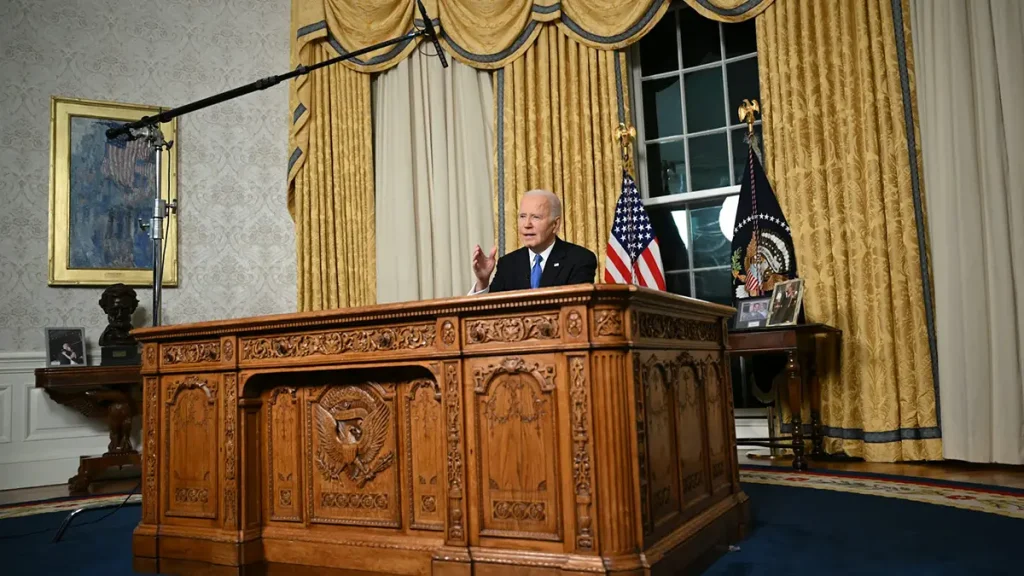
In some circumstances, a president’s official Farewell Address to the Nation may be an occasion for sunny reflection. President Joe Biden’s, delivered five days before he left office, began that way, with a celebration of America’s promise and of its progress under his tenure.
But midway through, Biden’s tone shifted abruptly, as he warned of a “dangerous concentration of power in the hands of a very few ultra-wealthy people, and the dangerous consequences if their abuse of power is left unchecked.”
In striking phrases, Biden charged that an “oligarchy” of “extreme wealth, power and influence” threatened not only Americans’ cherished legacy of equal opportunity, but their “basic rights and freedoms” and even the health of democracy itself. “We see the consequences all across America,” he observed. “And we’ve seen it before.”
Indeed. As historical grounding for his critique of today’s “tech-industrial complex,” Biden invoked President Dwight Eisenhower’s famous warning of a “military-industrial complex” in his 1961 Farewell Address. Reaching further back, Biden recalled the battle more than a century ago to tame the country’s industrial “robber barons.”
Yet, as scholars of American history well know, the roots of Biden’s rhetoric go back further still, to yet another president and another official Farewell Address: that of Andrew Jackson in 1837.
Biden and Jackson
The resemblances between the two addresses are striking, especially given the nearly two centuries that separate them. Like Biden, Jackson began in fatherly tones, basking in Americans’ accomplishments and prosperity, before turning to warn of the force that threatened them.
That force was a “moneyed interest” embodied in a “multitude of corporations with exclusive privileges,” especially banks, whose concentrated wealth and influence gave them power over working people’s livelihoods and well-being, their rights, and their voice in government.
Jackson warned that if ordinary Americans dropped their guard, they would find “that the most important powers of government have been given or bartered away, and the control over your dearest interests has passed into the hands of these corporations.”
Biden’s warning of “the concentration of technology, power, and wealth” in self-interested private hands echoed this theme precisely.
Not opposed to wealth per se
Addressing the nation, both Jackson and Biden took pains to explain that they were not criticizing wealth itself. In his 1832 veto of the Bank of the United States recharter – the signature policy statement of his administration – Jackson had applauded American opportunity and the rewards that “superior industry, economy, and virtue” might bring. The danger lay not in wealth alone, but in the control that wealth gave some over others.
“It is to be regretted,” Jackson had then said, “that the rich and powerful too often bend the acts of government to their selfish purposes.” Every man had a right to the fruits of his own labor – as Biden would later put it, the right to “a fair shot, an even playing field, going as far as your hard work and talent can take you.”
Hence no one, said Jackson, should decry the riches that some men earned for themselves. But when the laws went beyond that, working “to make the rich richer and the potent more powerful,” then “the humble members of society” had “a right to complain of the injustice of their Government.”
A recurring theme – especially for Democrats
Jackson’s words in his Bank Veto and Farewell Address pioneered what became a recurring theme in American political discourse.
A parting benediction is no place for party sniping, and Biden’s invocation of Eisenhower, a Republican, offered a gesture toward bipartisanship. His mention of the robber barons recalled another Republican president, Theodore Roosevelt, who famously busted trusts and decried what he called “malefactors of great wealth.”

Yet historically it has most often been Democrats who cast themselves as champions of the underdog, the little guy, the common man – what Jackson’s Farewell Address called “the agricultural, the mechanical, and the laboring classes … the bone and sinew of the country,” against “the rich and powerful.” Echoing Jackson, Democrats from William Jennings Bryan to Franklin Roosevelt to Sen. Elizabeth Warren have targeted big banks as wielders of illicit power and oppressors of the working people.
Recent shifts in society have muted this long-standing Democratic critique of concentrated wealth. Biden’s resuscitation of the old theme, while updating it to address new concerns – climate change, artificial intelligence, the spread of disinformation and of political dark money – represents a return to a recurring trope in American political discourse, and to a foundational identity for Biden’s Democratic Party.
Americans have been likening Andrew Jackson to Donald Trump ever since Trump himself proclaimed Jackson as his presidential model during his 2016 campaign. Trump has invoked Jacksonian precedents for his assertive foreign policy and his assault on the governing establishment, while critics have likened his immigration policy, and what they perceive as its racist underpinnings, to Jackson’s Native American removal and pro-slavery stances.
How much real resemblance Trump bears to Jackson, in either policy or personality, can be debated. But it is beyond doubt that, in warning of the threat of concentrated and unbridled power in the hands of a wealthy and privileged elite, Biden has recalled and reclaimed a Democratic Party heritage that traces back through Lyndon Johnson and Franklin Roosevelt to Woodrow Wilson, William Jennings Bryan – and finally to the party’s founder, Andrew Jackson.
Daniel Feller, Emeritus Professor of History, University of Tennessee
This article is republished from The Conversation under a Creative Commons license. Read the original article.

In Memoriam: Paul Pinckney
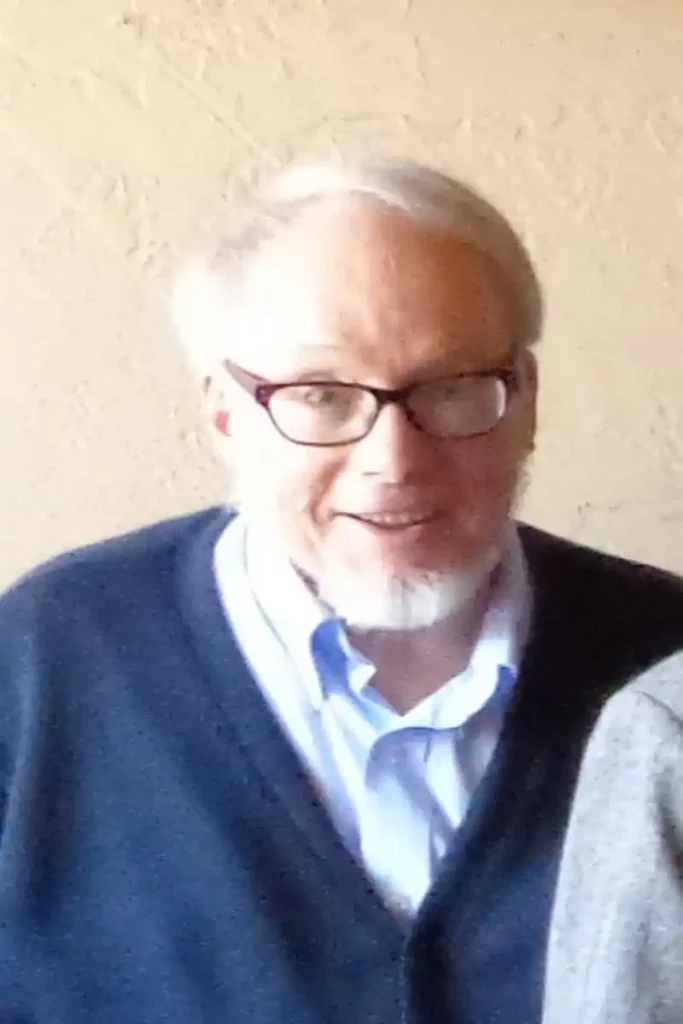
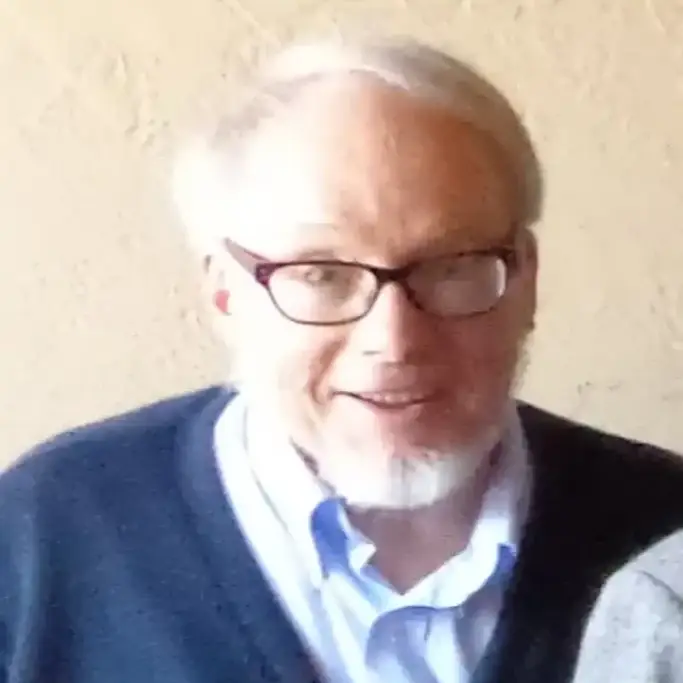
It is with sadness that we learned that Paul J. Pinckney passed away on August 29, 2024. Dr. Pinckney joined the UTK History Department in 1969, retiring in 2006 to enjoy life with his wife Margaret, their children and grandchildren, and their cats. John Bohstedt, a former colleague, wrote us that “Paul personified and deepened the History Department’s core commitment to teaching and nurturing student growth. He was a dear friend to many, and the sweet gatherings he and Margaret held enriched communal networks.”
Dr. Pinckney taught British history and loved taking students on study abroad trips to London. He won several teaching awards, including the University’s prestigious L. R. Hessler Award for Excellence in Teaching and Service. Dr. Pinckney received his BA from Davidson College in 1954 and his PhD from Vanderbilt University in 1969. He taught at the University of North Carolina at Chapel Hill before moving to Knoxville. Davidson College posted an extended obituary on their In Memoriam site: https://inmemoriam.davidson.edu/2024/08/paul-jan-pinckney-54/.
The Pinckney Scholarship fund was created in his honor by Pinckney’s former students, who remember him as a “devoted teacher and friend,” and as “challenging, enlightening, and inspiring.” Gifts in memory of Dr. Pinckney may be made to the Paul J. Pinckney Scholarship Endowment at UT by check payable to the UT Foundation, memo line: IMO Paul J. Pinckney, ACE # 0000122931. Send c/o UT Foundation, 1525 University Avenue, Knoxville, TN 37921. Phone: 865-974-2115
Secure online gifts may be made here: giving.utk.edu/pinckney
Alumni – Keep in touch: https://history.utk.edu/share-your-news/
- « Previous Page
- 1
- 2
- 3
- 4
- …
- 6
- Next Page »