
• Request More Info
  • Visit
  • Apply
  • Give
  • Request More Info
  • Visit
  • Apply
  • Give

Search

A-Z Index Map

History

  • About
    • Why Study History?
    • Areas of Study
    • Faculty Publications
    • The Jangle Podcast
    • Alumni Profiles
    • Contact Us
    • Give
  • People
    • Faculty
    • Teaching Faculty
    • Research Faculty
    • Associated Faculty
    • Staff
    • Graduate Students
    • Emeriti
  • Undergraduate
    • Majors / Minors
    • Declare
    • Honors Program
    • Advising
    • Classes
    • Beyond the Classroom
    • Careers
    • Scholarships & Awards
  • Graduate
    • Concentrations
    • MA Program
    • PhD Program
    • Apply
    • Funding
    • Forms
    • Graduate Handbook
  • Community Engagement
    • Local Histories
    • Summer Bridge Program
    • Bridge to AP U.S. History
    • Papers of Andrew Jackson
    • Tennesseans and War
  • News & Events
    • News
    • Events
    • Public Lecture Series
    • Newsletters
  • Share Your News
topography background

News

News

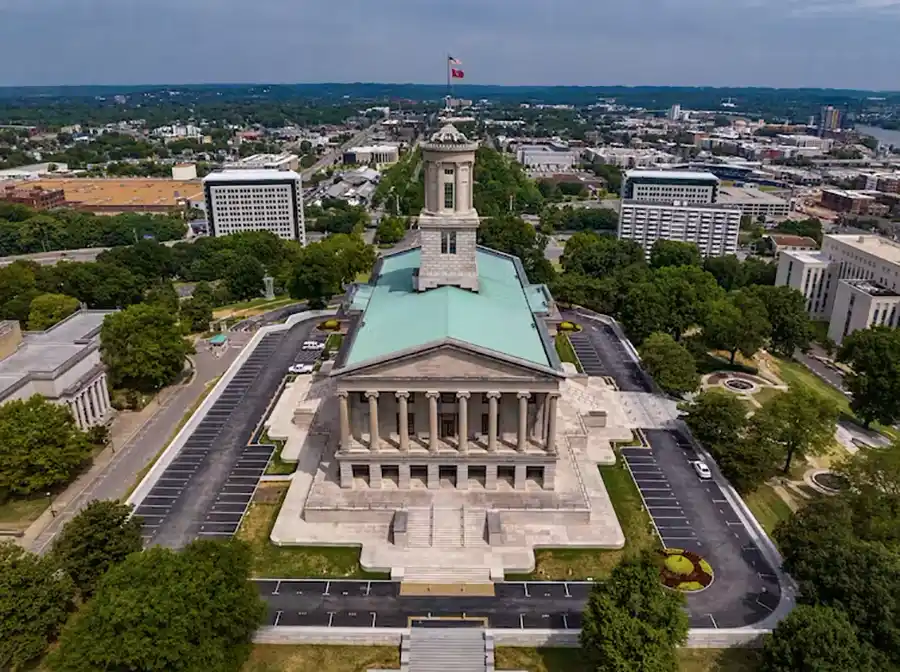
Tennessee State Capitol

White Tennessee lawmakers speak out for insurrection in honoring Confederate history

May 11, 2023

Tennessee State Capitol
The Tennessee State Capitol. Joe Sohm/Visions of America/Universal Images Group via Getty Images

Daniel Feller, University of Tennessee

The ghost of the Confederacy hangs heavily over the Tennessee Legislature.

Justin Jones, one of two Black members expelled from the state’s House of Representatives in April 2023, had run afoul of House leadership before. In 2019, as a private citizen, he was arrested following his actions in protesting a bust in the state capitol honoring Nathan Bedford Forrest, a Confederate general and later Grand Wizard of the Ku Klux Klan.

While the expulsion of Jones and his colleague, Justin J. Pearson, riveted the nation’s attention, a curious and related event in the Legislature’s other branch, the Tennessee Senate, passed nearly unnoticed.

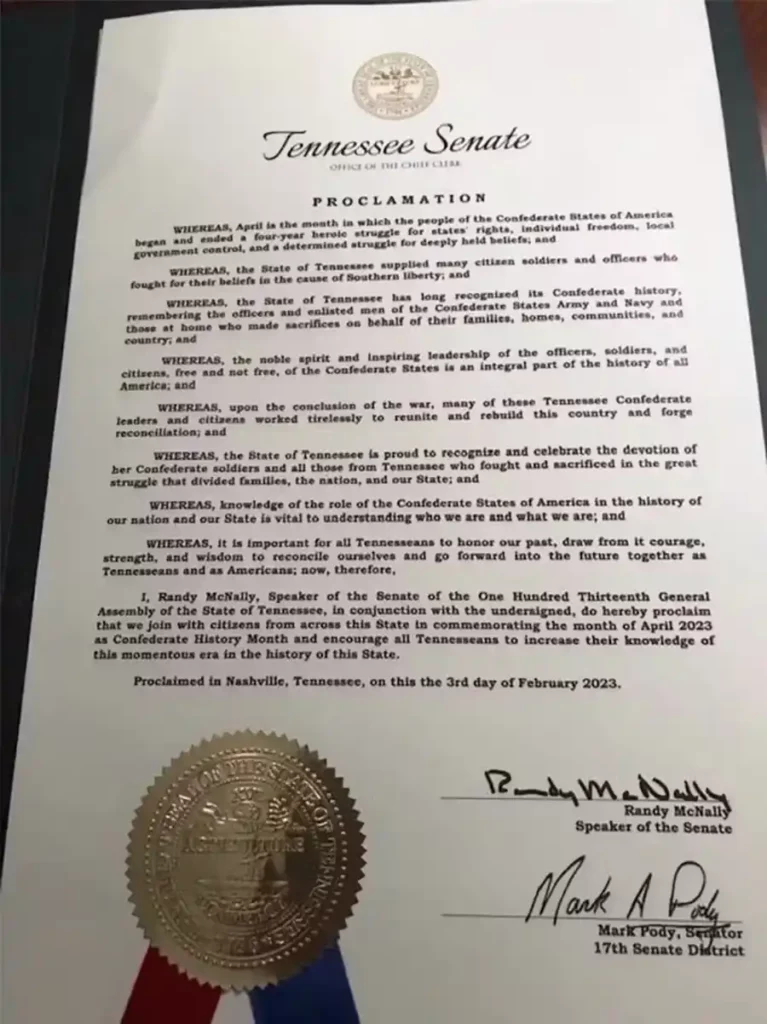
On Feb. 3, 2023, two state senators issued a formal proclamation commemorating April 2023 as Confederate History Month and encouraging “all Tennesseans to increase their knowledge of this momentous era in the history of this State.”

One of the signers is Senate Speaker Randy McNally, who is also the state’s lieutenant governor; the other is Sen. Mark Pody from Lebanon. Though not considered in legislative session and not listed on the Legislature’s website, the proclamation holds an official stature: It was issued on Senate stationery and stamped with the Tennessee state seal.

The proclamation’s wording closely follows that of a proclamation issued by Virginia’s Gov. Robert McDonnell in April 2010, with one striking exception. McDonnell’s proclamation in final form included a paragraph, inserted after protests to an earlier version, stating “that it is important for all Virginians to understand that the institution of slavery led to this war.”

The Tennessee proclamation, which includes eight introductory clauses celebrating “the cause of Southern liberty,” says nothing of slavery at all. Rather, it declares that Confederates conducted “a four-year heroic struggle for states’ rights, individual freedom, local government control, and a determined struggle for deeply held beliefs.”

A proclamation of the Tennessee Senate
A proclamation of the Tennessee Senate declares April 2023 Confederate History Month. Tennessee State Senate, CC BY-ND

Safeguarding slavery

As we historians of the Civil War have tirelessly pointed out, the documentary record speaks clearly of the motive behind that “heroic struggle.”

Both official proceedings and private utterances prove abundantly that there was only one reason to secede from the United States and create a new Confederacy. That was to safeguard racial slavery from the threat posed by the election of an antislavery Northerner, Abraham Lincoln, as president of the United States.

Tennessee seceded later than other states, after the Confederate firing on Fort Sumter. Lincoln’s responding call for troops made plain that there would be a war and that Tennessee, like other fence-sitting Upper South states, would have to choose sides.

The record of the state’s reasons is easy to find, and would have been available to the authors of the recent proclamation. In 2021, the University of Tennessee Press published “Tennessee Secedes: A Documentary History.” It shows that in Tennessee, as elsewhere, the protection of slavery was the sole motive for secession.

In 1861, Gov. Isham Harris convened the state’s Legislature with a message denouncing the North’s “systematic, wanton, and long continued agitation of the slavery question,” crowned by the insulting election of a president who “asserted the equality of the black with the white race.”

Harris went on:

“To evade the issue thus forced upon us at this time, without the fullest security for our rights, is, in my opinion, fatal to the institution of slavery forever. The time has arrived when the people of the South must prepare either to abandon or to fortify and maintain it. Abandon it, we cannot, interwoven as it is with our wealth, prosperity and domestic happiness.”

In all the deliberations that followed, no cause or grievance but slavery was mentioned.

Yet these basic facts go unacknowledged in a proclamation that boldly declares that knowledge of Confederate history is “vital to understanding who we are and what we are.”

Other omissions in the proclamation are equally curious.

Tennessee’s role in the Confederacy was uniquely conflicted. Thousands of citizens, especially in mountainous East Tennessee, opposed secession. Ignoring “local government control,” the state suppressed their dissent by force.

Some 50,000 Tennesseans, white and Black, spurned the Confederacy and fought for the United States – more than from any other Confederate state. The proclamation silently erases not only their struggle and sacrifice but their very existence.

‘Be not deceived by names’

Whether the Confederacy should be celebrated or condemned depends inescapably on point of view.

The proclamation casts the Confederacy in the mode of the American Revolution. The picture it paints is of a noble, if unsuccessful, attempt to erect a new self-governing independent nation – ignoring the fact that the institution of human slavery was at its center, as the Confederate constitution made clear.

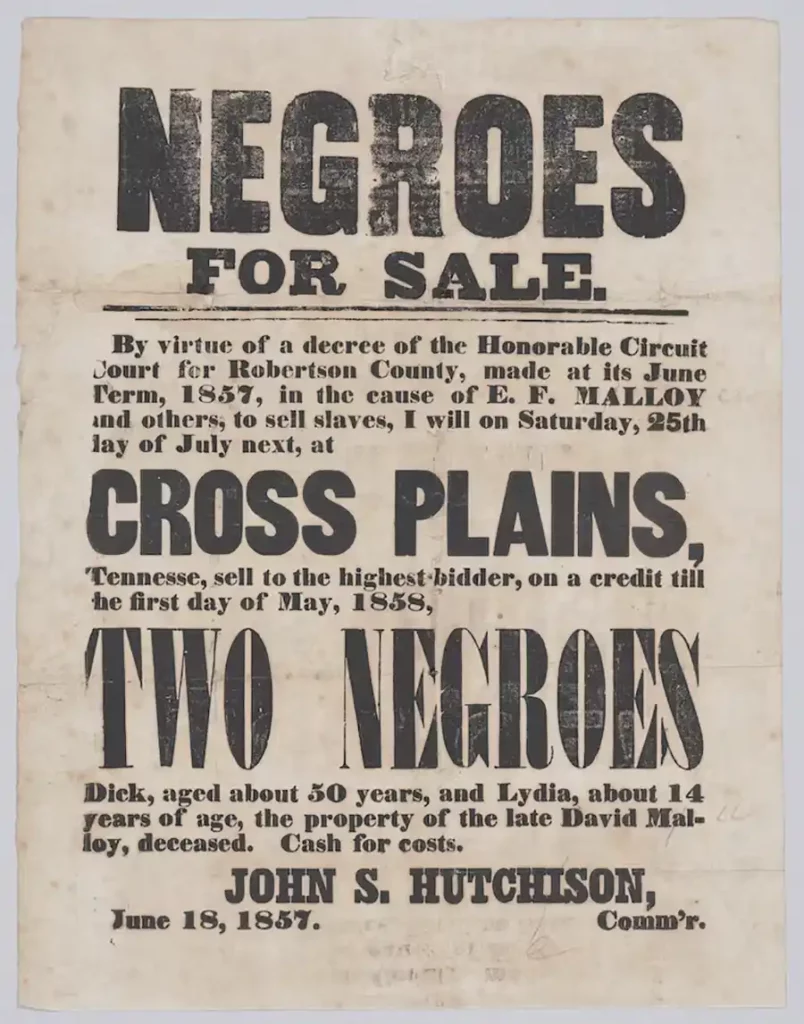
A broadside from 1857, John S. Hutchison announcing the sale of two enslaved people
Broadside announcing the sale of an enslaved man named Dick and an enslaved girl named Lydia in Cross Plains, Tenn., dated June 18, 1857. Heritage Art/Heritage Images via Getty Images

Yet from another perspective, the Confederacy was nothing more than an armed mass rebellion against a legitimately elected government.

It was, ironically, a famous Tennessean, President Andrew Jackson, who had warned would-be seceders in an official proclamation in 1832: “Be not deceived by names. Disunion by armed force is treason. Are you really ready to incur its guilt?”

Lincoln labeled the Confederacy an “insurrection” within the United States itself, which the government and loyal citizens had not only a right but a duty to put down.

In words that echo today, Lincoln also observed that if the United States won its battle against forcible dismemberment, “it will then have been proved that, among free men, there can be no successful appeal from the ballot to the bullet; and that they who take such appeal are sure to lose their case, and pay the cost.”

Celebrating insurrection

The old adage that the victors write history is true at least to this extent. Generally the American Revolutionaries are deemed patriot heroes rather than rebels and traitors because they won their war, and because the course of subsequent history appears to have vindicated their cause.

Yet many Confederate acolytes, the proclamation’s sponsors among them, seem to have difficulty confronting what the Confederacy actually stood for. Hence, citizens serving in government – who upon entering their offices take a solemn oath to uphold and defend the United States Constitution and begin their daily sessions by pledging allegiance to “one Nation indivisible” – chose to officially exalt a failed attempt to overthrow that Constitution and dismember the nation that it bound together.

Under a statute enacted in 2021, Tennessee public school teachers are barred from using instructional materials “promoting or advocating the violent overthrow of the United States government.”

No such prohibition applies to state legislators.The Conversation

Daniel Feller, Emeritus Professor of History, University of Tennessee

This article is republished from The Conversation under a Creative Commons license. Read the original article.
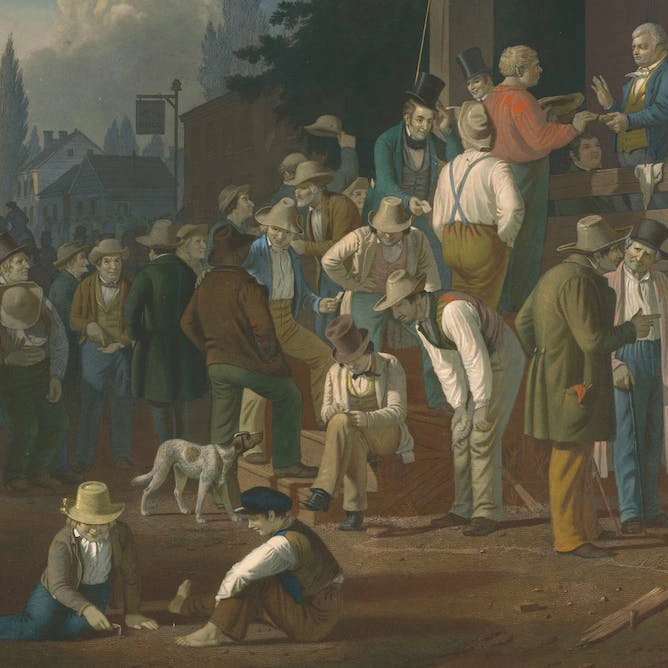
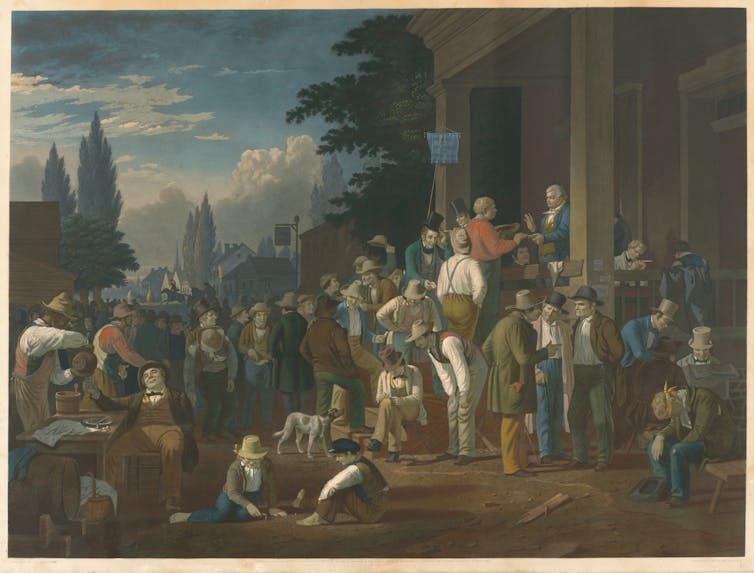
Filed Under: News

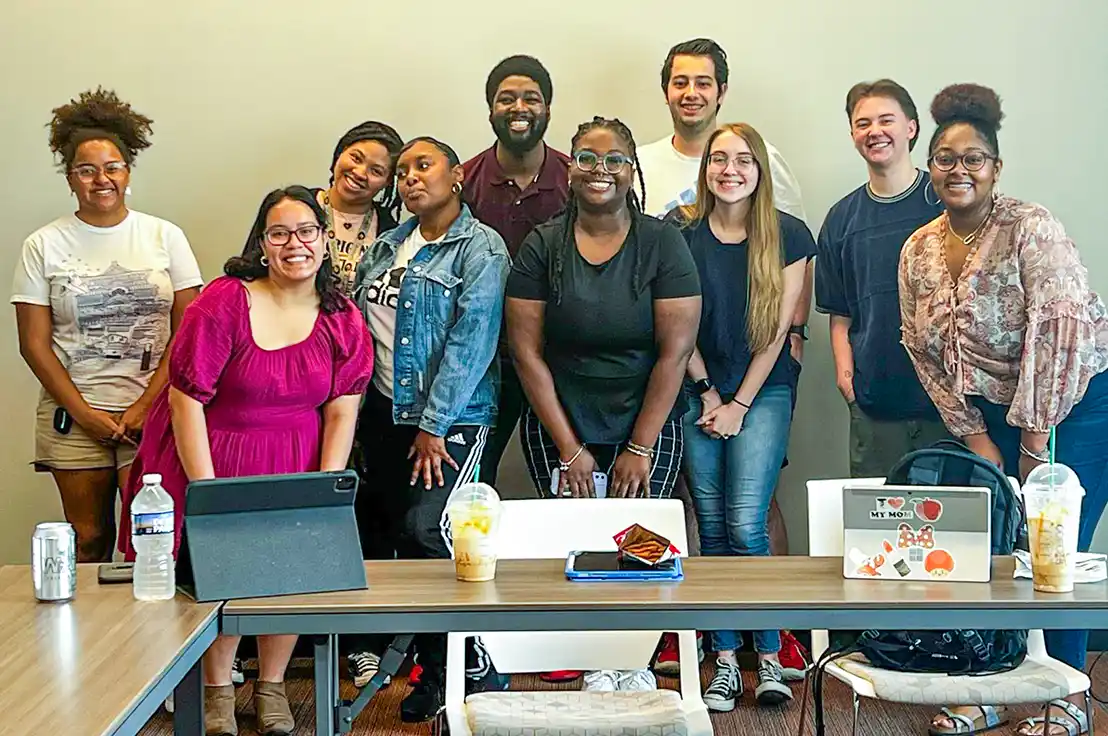
A photo of the 2023 Bridge Program Participants

Summer 2024 Bridge Program Schedule

May 5, 2023

Tuesday, May 7: Welcome

  • Staggered arrivals
  • 5:00 pm: TBD
  • 6:00 pm: Welcome Reception in UT Conference Center Room 406, 600 Henley Street, Knoxville TN

Wednesday, May 8: Introduction to the Profession and to Graduate Study

All daytime events will meet in UT Conference Center Room 403, 600 Henley Street. Evening event is at the Volunteer Landing Marina.

  • 9:00-9:30: Session 1: Orientation: How to Prepare for the Next Three Days
  • 9:45-10:45 am: Session 2: History as a Profession: Exclusions and Opportunities
  • 10:45-10:55 am: Break
  • 10:55-12:35: Session 2: Panel of Historians in the Field (via Zoom)
    • Featuring: Dr. Jocelyn Imani, Dr. Kelli Mosteler, Dr. Crystal Moten
  • 12:35-2:00 pm: Lunch  
  • 2:00-3:15 pm: Session 3: What to Expect in Graduate School
  • 3:15-3:25 pm: Break
  • 3:25-4:55 pm: Session 5: Graduate student panel
  • 6:00 pm: Volunteer Princess Sunset Cruise on the Tennessee River. Meet at Volunteer Landing Marina. Shuttle bus pickup from Day 1 location.

Thursday, May 9: Doing research, Sharing research

First event of the day is at Hodges Library. All other daytime events will meet in Student Union, room 262A.

  • 9:30-10:15: Session 6: Thinking about your Research Interests
    • Meet at Hodges Library, Public Services, 1015 Volunteer Blvd.
    • Featuring Professor Shaina Destine, MLIS
  • 10:15-11:15: Session 7: Library Resources: what are they for, how can they help you?
  • 11:15-11:30: Break, walk to Student Union 262A
  • 11:30 am-12:45 pm: Session 8: Faculty Experiences in History
  • 12:45-1:45: Lunch
  • 1:45-2:45: Session 9: Student Share Outs 1
  • 2:45-3:50: Session 10: Student Share Outs 2
  • 3:50-4:00: Break
  • 4:00-5:00: Session 11: Faculty break out mentoring sessions
  • 5:00-5:30: Quick Prep Session: Look up two graduate programs
  • 6:30 pm: Graduate Student Night on the Town at Maple Hall (Bowling…bring socks!)

Friday, May 10: Demystifying the Application Process

All daytime events will meet in Student Union, room 169. 

Featuring: Dr. Tore Olsson and Dr. Luke Harlow

  • 9:15-10:00 am: Session 12: Keynote Address from UTK Bridge Program Alumnus
  • 10:00-10:45: Session 13: Dr. Ernest Brothers, Associate Dean of the Graduate School
  • 10:45-11:00: Break
  • 11:00-12:30: Session 14: Finding and Choosing a Graduate Program
  • 12:30-1:30 pm: Lunch
  • 1:30-2:45 pm: Session 15: Statement of Purpose Workshop
  • 2:45-3:05 pm: Break
  • 3:05-4:15 pm: Session 16: Other Materials – GRE & GPA, CV and writing sample
  • 4:15-5:00 pm: Session 17: Financial Matters, From Start to Finish
  • 5:00-5:20 pm: Exit survey, Next Steps, and Farewells

Saturday, May 11: Departures

Filed Under: News

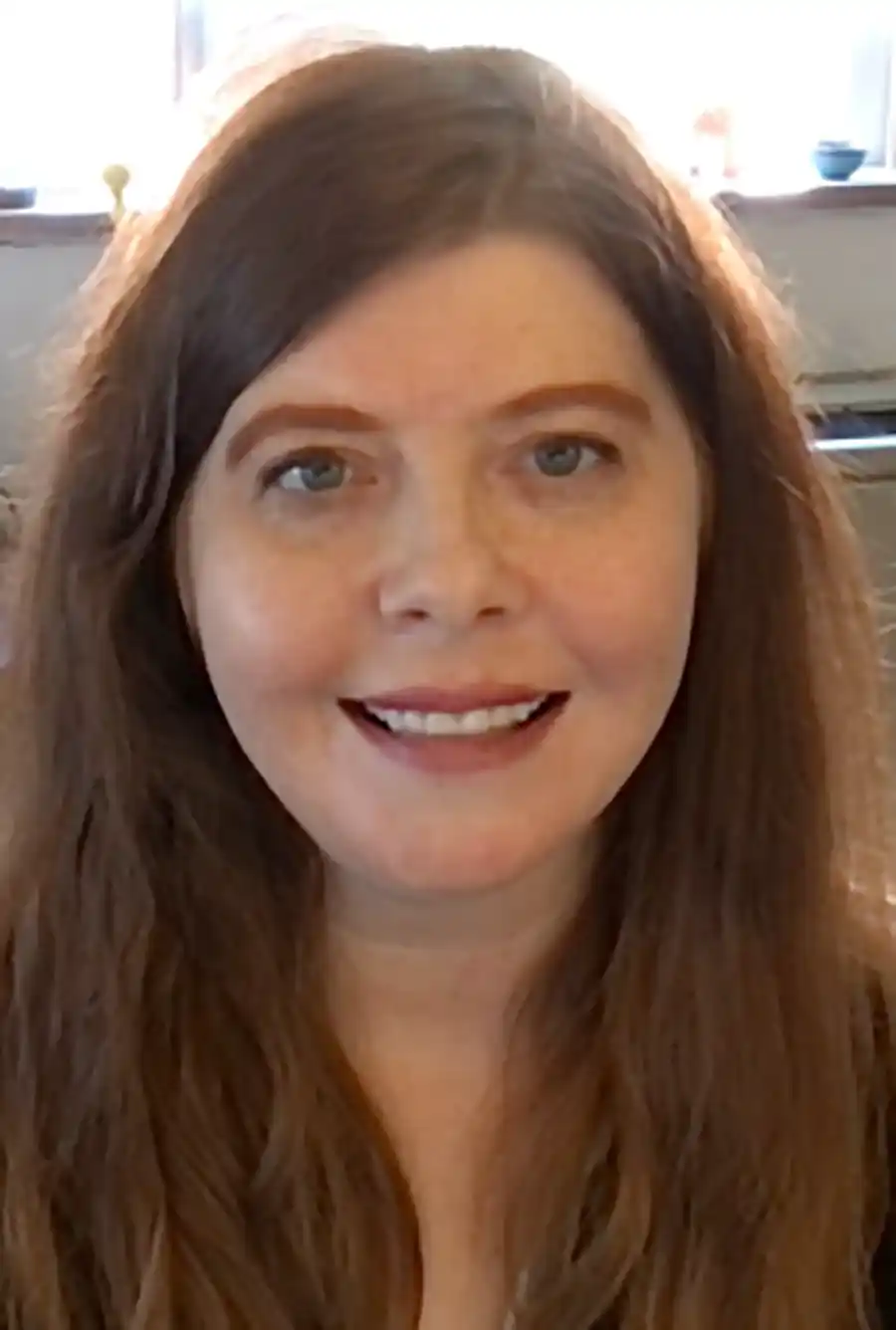
A photo of Mary Beckley

Staffer Mary Beckley, a Kidney Transplant Recipient, Finds Harmony in History

April 21, 2023

A photo of Mary Beckley

As an administration specialist II for the Department of History, Mary Beckley wears many hats: scheduler, purchaser, publicist, inventory clerk, and all-around problem-solver. 

“There’s always moving parts,” she said. “It means I can’t stop learning myself.” 

A “military brat,” Beckley was born in South Carolina and lived in Japan for 3.5 years as a young child. The family then moved to Austin, Texas, where Beckley lived until she graduated from high school. She then moved to East Tennessee to attend Maryville College, her grandparents’ alma mater.

Beckley earned a bachelor’s degree in music education and, over the years, she’s taught private music lessons and volunteered with the Joy of Music School.

“Music is one of my lifelong loves,” said Beckley who has played piano since age 5. “Originally the plan was to become a music teacher.”

But during college she struggled with illness—the result of a genetic kidney disease—and soon after graduating, started on dialysis. Six months later she had a kidney transplant. Her donor was her sister Sarah, a lecturer at Clemson.

Once she recovered enough to work, Beckley needed to find a job with good insurance. She joined UT’s temp pool in 2007 and started working as a graduate school coordinator in the School of Architecture. The next year, she was offered the full-time job in history.

“I’m extremely, extremely lucky to be where I am,” she said. “I’ve had nothing but support from everyone I work with.”

Fifteen years after her transplant, Beckley is doing well. She married her husband, Rick, in 2010.

“I’m in good health. I watch my diet and I exercise. I do have to watch for getting tired and staying clear of the latest bug going around. And I have to be careful not to sit too long because that will mess up my circulation,” she said. 

Landing in the history department has been a nice fit for Beckley in other ways, too.

“I, personally, am a lover of history,” she said, adding that her mother was a librarian and taught high school history.  “I grew up surrounded by history books. She collected them like crazy. I never thought of history as boring. It was one of those things I always wanted to know more about.”

During her time at UT, Beckley has seen a major shift from keeping paper files to doing most administrative work online. Greater use of technology means questions about computers and software. Beckley said she’s tried to school herself in all of that to troubleshoot many issues without calling for help.

“I do like detail and solving problems,” she said. But, she admits, that can be “like death by a thousand papercuts. There’s always detail upon detail to think about.”

In her spare time, Beckley enjoys reading, writing, and listening to live music.

“I’m a faithful Big Ears Festival ticketholder,” she said. Some favorite concerts she’s experienced—other than Paul McCartney—have included singer/songwriter/pianist Tori Amos, blues/rock/soul/hip-hop artist Gary Clark Jr., and “punk rock laureate” Patti Smith.

—Story by Amy Blakely

Filed Under: News

Duygu Yıldırım

Yıldırım awarded 2023 ACLS Fellowship

April 19, 2023

Duygu Yıldırım

Duygu Yıldırım, an assistant professor of history at UT, has been awarded a 2023 ACLS Fellowship from the American Council of Learned Societies (ACLS) in support of her book project, Uncertain Knowledge: The Making of Slow Science between the Ottoman Empire and Early Modern Europe.

The ACLS Fellowship Program supports exceptional scholarship in the humanities and interpretive social sciences that has the potential to make significant contributions within and beyond the awardees’ fields. Yıldırım is one of 60 early-career scholars from around the country who were selected through a multi-stage peer review from a pool of nearly 1,200 applicants. ACLS Fellowships provide between $30,000 and $60,000 to support scholars during six to 12 months of sustained research and writing.

“With higher education under sustained attack around the country, ACLS is proud to support this diverse cohort of emerging scholars as they work to increase understanding of our connected human histories, cultures, and experiences,” said ACLS President Joy Connolly. “ACLS

Fellowships are investments in an inclusive future where scholars are free to pursue rigorous, unflinching humanistic research.”

Yıldırım’s work explores the role of uncertainty during the globalization of scientific and medical knowledge in the late seventeenth and early eighteenth centuries. Her book project will show how the rhetoric of uncertainty became a new mode of inquiry and a highly productive new strategy to accommodate emerging anxieties about human diversity, confessional and inter-religious conflict, and the fragmentary knowledge of newly circulated medicinal substances and plants.

Taking comparative and connective perspectives that bridge the Ottoman and European contexts of the early modern period, Yıldırım’s book will offer a more granular picture of knowledge-making during a time when science lost its assertive firmness and became more provisional, revocable, and all-in-all slower in an increasingly global world.

Yıldırım was previously awarded a 2023-2024 Faculty Research Fellowship from the UT Humanities Center. As an ACLS Fellow, she will still participate in the Humanities Center’s events throughout the year alongside the center’s cohort of fellows.

Filed Under: News

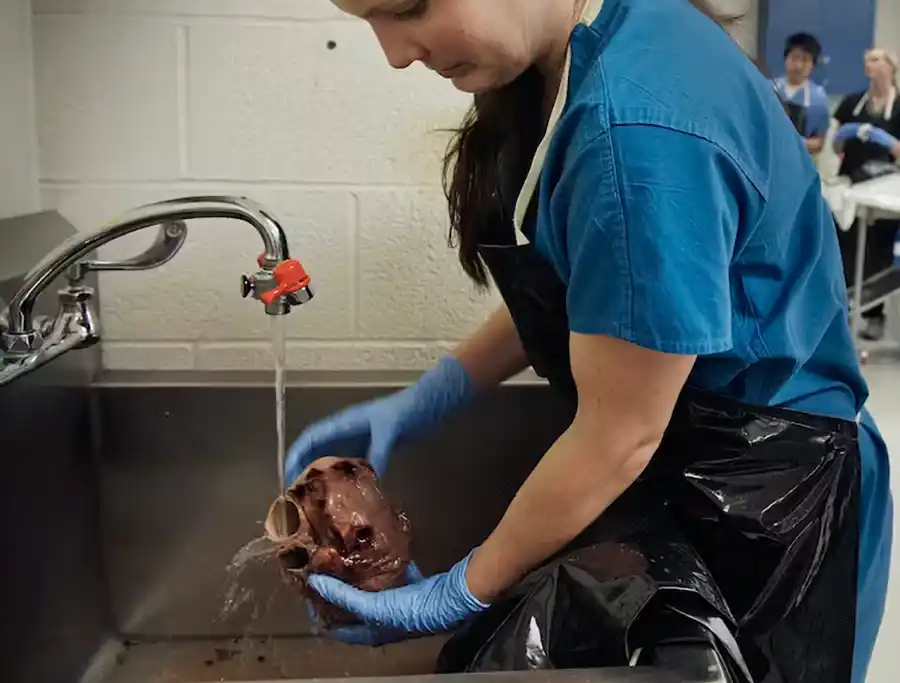
A Georgetown University medical student washing an organ from a donated cadavers her anatomy class in 2011

From grave robbing to giving your own body to science – a short history of where medical schools get cadavers

March 10, 2023

A Georgetown University medical student washing an organ from a donated cadavers her anatomy class in 2011
These Georgetown University medical students used donated cadavers in their anatomy class in 2011. Bill O’Leary/The Washington Post via Getty Images

Susan Lawrence, University of Tennessee and Susan E. Lederer, University of Wisconsin-Madison

In 1956, Alma Merrick Helms announced that she was bound for Stanford University. But she would not be attending classes. Upon learning that there was a “special shortage of women’s bodies” for medical students, this semiretired actress had filled out forms to donate her corpse to the medical college upon her death.

As historians of medicine, we had long been familiar with the tragic tales of 18th- and 19th-century grave robbing. Medical students had to snatch unearthed bodies if they wanted corpses to dissect.

But there was little to no discussion of the thousands of Americans in the 20th century who wanted an alternative to traditional burial – those men and women who gave their bodies to medical education and research.

So we decided to research this especially physical form of philanthropy: people who literally give themselves away. We are now writing a book on this topic.

Grave robbing and executed criminals

As more and more medical schools opened before the Civil War, the profession faced a dilemma. Doctors needed to cut open dead bodies to learn anatomy because no one wanted to be operated on by a surgeon who had only been trained by studying books.

But for most Americans, cutting up dead human beings was sacrilegious, disrespectful and disgusting.

According to the ethos of the day, only criminals deserved such a fate after death, and judges intensified murderers’ death sentences by adding the insult of dissection after their executions. As in life, the bodies of enslaved people were also exploited in death, either consigned for dissection by their masters or robbed from their graves.

Yet there were never enough legally available bodies, so grave robbing flourished.

The unclaimed poor

To meet the medical professon’s growing demand for cadavers, Massachusetts enacted the first anatomy law. This measure, passed in 1831, made the bodies of the unclaimed poor available for dissection in medical schools and hospitals.

With more medical schools opening and grave-robbing scandals pushing politicians to act, similar legislation eventually took effect across the United States.

One of the most visible incidents occurred when the body of former Rep. John Scott Harrison, both the son and the father of U.S. presidents, involuntarily turned up on an Ohio dissecting table in 1878.

In many states, kin and friends could claim a body that would otherwise be destined for dissection, but only if they could pay burial costs.

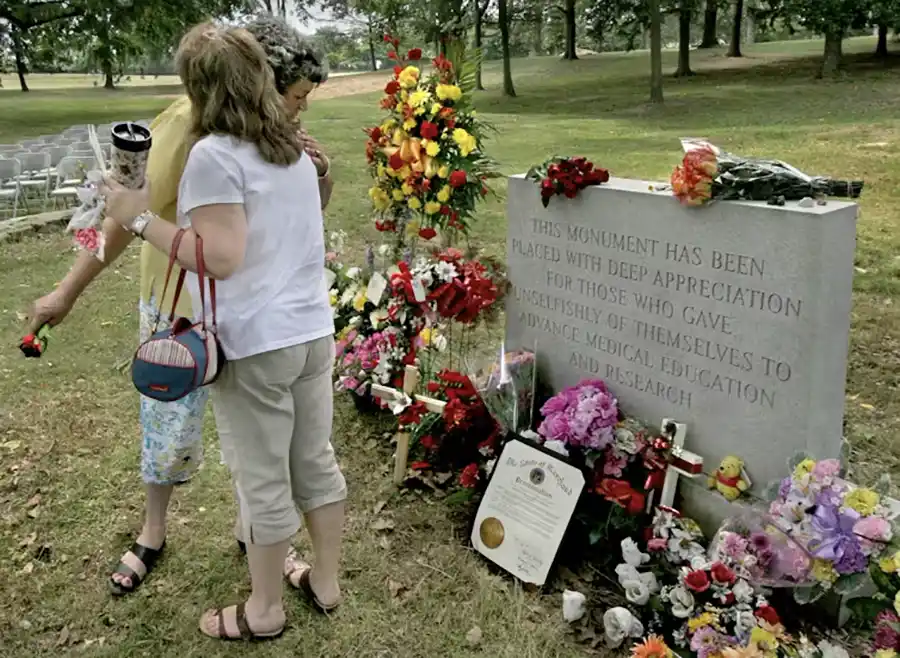
Two women hug by a monument to honor those who have donated their bodies to science
Monuments to honor those who have donated their bodies to science like this one can offer opportunities for their loved ones to mourn and remember them. Michael Williamson/The Washington Post via Getty Images

Donated bodies

Yet not everyone shared the horror at the very idea of being dissected.

By the late 19th century a growing number of Americans were willing to let medical students cut up their bodies before eventual burial or cremation. It did not apparently frighten or disgust them.

Doctors volunteered, but so did nurses, store owners, actors, academics, factory workers and freethinkers – even prisoners about to be executed. Some were people who simply sought to avoid funeral expenses.

Other Americans hoped that doctors would use their bodies to research their diseases, while others wanted to enable “medical science to enlarge its knowledge for the good of mankind,” as George Young, a former wagon-maker, requested before he died in 1901.

Cornea transplants

By the late 1930s, advances in cornea transplant surgery made it possible for Americans to gift their eyes to restore the sight of blind and visually impaired men, women and children.

Along with World War II blood drives, heartwarming stories about corneal transplants spread a radically new understanding of corporeal generosity.

As efforts to attract donors who would pledge their eyes at death spread in the 1940s and early 1950s, so too did a new problem for anatomists: a decline in the number of unclaimed bodies.

Anatomists blamed a host of factors: rising prosperity in the postwar years; new laws that allowed county, city and state welfare departments to bury the unclaimed; veterans’ death benefits; Social Security death benefits; and outreach by church groups and fraternal orders to take care of their poverty-stricken members.

Dear Abby and Reader’s Digest

By the mid-1950s concerns arose about cadaver shortages for anatomy classes. But media coverage of people who had chosen to donate their bodies started to sway others to follow suit. Good examples include a Dear Abby advice column published in 1958 and a Reader’s Digest article in 1961.

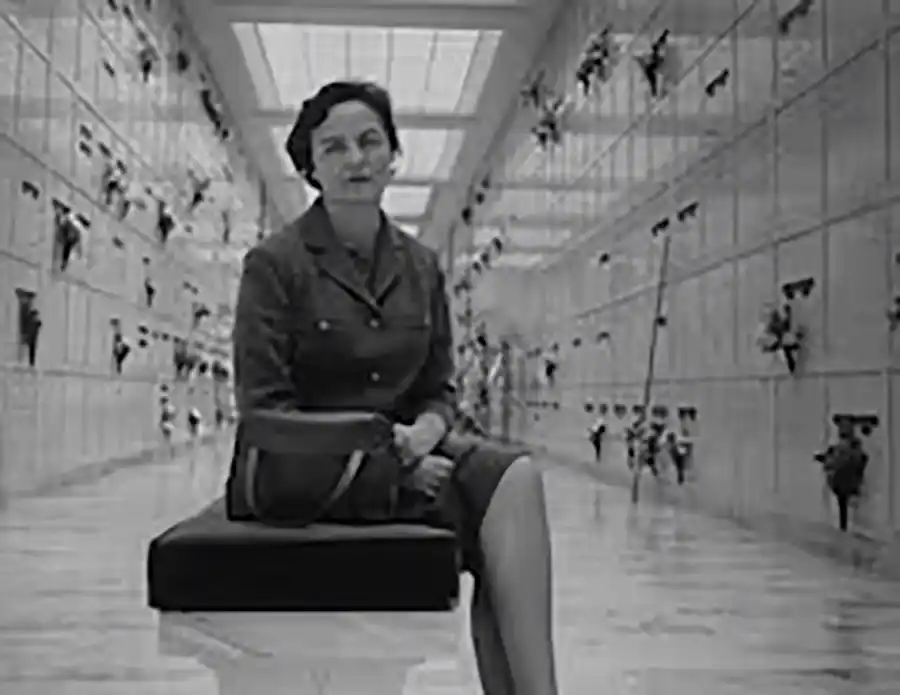
Author Jessica Mitford sits on a bench in what appears to be a mausoleum
In her exposé of the funeral industry’s problems, author Jessica Mitford endorsed donating bodies to science. Ted Streshinsky/Getty Images

In 1962, Unitarian advocate Ernest Morgan published “A Manual of Simple Burial,” which promoted memorial services as alternatives to lavish funerals. He included a directory of medical schools and dental schools that accepted whole-body donations.

Journalist Jessica Mitford, in her wildly popular 1963 book that condemned the funeral industry, “The American Way of Death,” also endorsed that practice. She helped make giving your body to science a respectable, even noble, alternative to expensive conventional burials.

In the early 1960s, Protestant, Catholic and Reform Jewish leaders also came out in favor of donating bodies to science.

By the late 1960s and early 1970s, some anatomy departments began to organize memorial services to acknowledge donors and provide some closure for their loved ones.

Word of such efforts further encouraged whole-body donation.

Letters of encouragement

We reviewed dozens of unpublished letters to and from donors in the 1950s to the early 1970s, in which anatomy professors encouraged potential whole-body donors to see themselves as heroically giving to medical science. Early donors frequently expressed this altruistic vision, wanting their mortal shells to participate in advancing knowledge.

By the mid-1980s, most medical and dental schools relied on donated bodies to teach anatomy, although a few unclaimed bodies still make their way today to medical schools. Technology has revolutionized anatomy teaching, as with the National Library of Medicine’s Visible Human Project, but cadavers are still needed.

Images and models cannot replace hands-on experience with the human body.

Where many Americans once regarded medical students as “butchers” for exploiting their beloved dead, contemporary students honor what some of these future doctors call their “first patients” for the precious gift they have been given.The Conversation

Susan Lawrence, Profesor of History, University of Tennessee and Susan E. Lederer, Professor of Medical History and Bioethics, University of Wisconsin-Madison

This article is republished from The Conversation under a Creative Commons license. Read the original article.
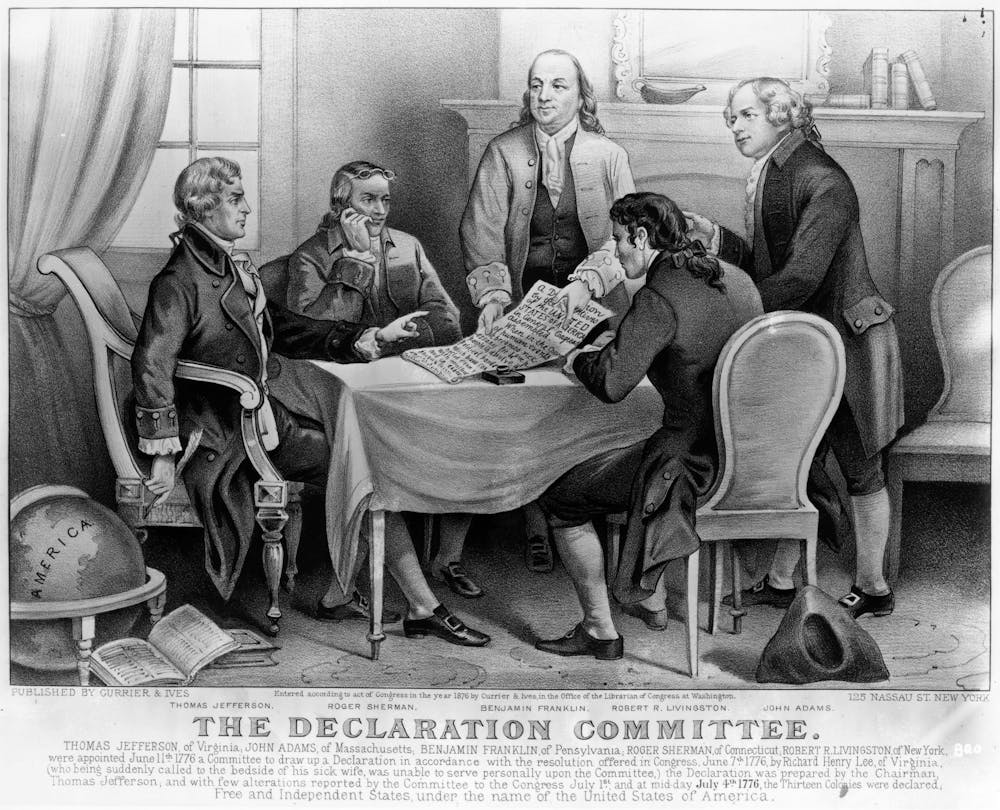
Filed Under: News

A picture of Nicole Eggers

Eggers Receives NEH Collaborative Research Grant

February 9, 2023

A picture of Nicole Eggers

Nicole Eggers, assistant professor of history at UT, and her collaborator, Roger Alfani of Seton Hall University, received a $199,611 Collaborative Research Grant from the National Endowment of the Humanities (NEH) for “Refuge in the Spirit: Religion in the Lives of Congolese Refugees,” a research project centered around oral histories of Congolese refugee communities.

According to the NEH, the Collaborative Research program “aims to advance humanistic knowledge by fostering rich scholarship that a single researcher could not accomplish working alone. The program supports sustained collaboration by teams of two or more scholars.”

Eggers’s expertise is in the history of health and healing, and the intersections of religion and politics, in Central Africa. Her co-author for the project, Alfani, is an expert in religious and peace studies in Congo.

“My collaborator and I will explore how religion has functioned both as a space for building community for people who have lost their social safety net, as well as its role in addressing gaps — material, social, psychological, and spiritual — that state and international organizations too often neglect,” Eggers said.

A picture of Alfani Roger
Alfani Roger

With funding from their grant, Eggers and Alfani will conduct interviews among Congolese refugees still living in refugee camps in Kenya and Burundi, as well as among those who have left the camps — either to be repatriated to Congo, or to be resettled in the United States (specifically, in Knoxville, TN). The pair began fieldwork in Knoxville in December 2022 and they will continue their work in Africa in the summer of 2023.

Central to their investigation is the question of how people connect their experiences of social and physical security and insecurity to their understandings of spiritual security and insecurity. 

“Listening to refugees tell their own stories and respecting the values that inform their experiences is not just an intellectually valuable exercise, it is an ethical imperative and a decolonizing endeavor,” Eggers said.

This project has the potential to make important “real world” contributions by providing a culturally-specific, historically-grounded lens through which policymakers and resource-providers can not only better interpret refugee experiences and needs, but also meet those needs in an inclusive and participatory way.

Filed Under: News

A 3-dimensional view of the book Bearing The Torch, by T.R.C. Hutton

Bearing the Torch Published

November 17, 2022

A 3-dimensional view of the book Bearing The Torch, by T.R.C. Hutton
Bearing the Torch is available for purchase at UTPress.org and other booksellers.

Bob Hutton, associate professor of Appalachian studies at Glenville State University in Glenville, West Virginia, and former UT lecturer of history, published Bearing the Torch: The University of Tennessee, 1794–2010. Hutton’s book is a comprehensive history of UT that faculty, students, alumni, Vols fans, or anyone interested in learning more about the history of UT will appreciate.

“There’s a campus history that came out in the 1980s that was in bad need of a successor. I think that mine’s unprecedented in its focus on the ever-changing quest for equality in our world and on our campuses.”

Hutton’s book portrays a biography about how UT’s history reflects both Tennessee and the nation, combining various historical contexts with UT’s own history and issues.

“I love spending time in the archives, and I do aspire to be a decent writer, and I thought it’d be nice to write something that I knew a lot of people would be interested in reading.”

“Most readers will gain an appreciation for how many times the school nearly disappeared and how many times it got much-needed help from surprising places (like the federal government, for one)” Hutton said.

“I’m hoping the book will give people a better sense of the school’s past and heritage.”

On Thursday, October 27 at 6 p.m. Hutton and writer/researcher Jack Neely were at the East Tennessee History Center to discuss Hutton’s new book. The conversation was also available to be streamed online.

—Story by Jessica Foshee

Filed Under: News

A photo of the cover of the Cas Walker book edited by Josh Hodge, alongside a photograph of Josh Hodge.

Cas Walker Stories Project

November 13, 2022

A photo of the cover of the Cas Walker book edited by Josh Hodge, alongside a photograph of Josh Hodge.
Joshua S. Hodge received his doctorate in history from the University of Tennessee, Knoxville, before his death in 2019.

The Cas Walker Stories project gathers the stories and legends told about one of 20th century Knoxville’s most famous citizens. Cas Walker was a grocer-politician-media celebrity-music promoter-coon hunter whose colorful life has become the stuff of the region’s favorite urban legends.

The project has recorded the oral histories of many who knew Cas Walker, as friends, employees, and political rivals or allies, and collected others from the public. Many of these are gathered in Cas Walker: Stories on his Life and Legend, published by UT Press and edited by Joshua Hodge, a PhD student in the History Department who passed away while the book was in its final stages of completion. An endowment fund, raised in his honor, supports graduate research. The oral histories that Josh recorded will be deposited with the Knox County Library’s archives.

You can also hear more about the project in this episode of the Raised in Knoxville podcast, where host Todd Steed discusses the project with Ernie Freeberg. To learn more about the book or leave your own Cas Walker story, visit the link below.

From the University of Tennessee Press about Cas Walker: Stories on His Life and Legend

This wonderfully entertaining book brings together selections from interviews with a score of Knoxvillians, various newspaper accounts, Walker’s own autobiography, and other sources to present a colorful mosaic of Walker’s life. The stories range from his flamboyant advertising schemes—as when he buried a man alive outside one of his stores—to memories of his inimitable managerial style—as when he infamously canned the Everly Brothers because he didn’t like it when they began performing rock ’n’ roll. Further recollections call to mind Walker’s peculiar brand of bare-knuckle politics, his generosity to people in need, his stance on civil rights, and his lifelong love of coon hunting (and coon dogs). The book also traces his decline, hastened in part by a successful libel suit brought against his muckraking weekly newspaper, the Watchdog.

Cas Walker Project

Give to Josh Hodge Endowment

More Local Histories

Buy the Book

Filed Under: News

A picture of Dan Feller

A Legacy of Jacksonian Scholarship

September 9, 2020

A picture of Dan Feller
Dan Feller

Dan Feller joined the Department of History in 2003 with a scholarly focus on Jacksonian politics. This spring, he retires as a Distinguished Professor of Humanities and leaves a legacy of building one of the most important and visible presidential papers projects in the country – the Papers of Andrew Jackson.

“Under Dan’s leadership, the Jackson papers project has made a bid to become the most productive and respected documentary editing project of its kind in the country,” said Thomas Coens, associate editor of the Jackson Papers. “We have published at a breakneck clip while maintaining rigorous standards of thoroughness and accuracy. Fellow scholars praise the project and in 2017, it won the Jefferson Prize.”

The project received a grant from the National Endowment of the Humanities in 2018 to prepare Volumes 11, 12, and 13 for publication. The $325,000 grant was the second highest among the 21 awarded in the 2018 NEH Scholarly Editions and Translations program.

“The generous grant was the largest we have ever received from the NEH and came as a welcome show of confidence in the quality and significance of our work,” Feller said. “Jackson is an inescapably important figure in our nation’s history. From its beginning, the aim of the Jackson papers project has been to promote our understanding of Jackson and his era by making available the crucial primary sources and documents from which we can see, directly, what our forebears said and did.”

Andrew Jackson is one of the most critical and controversial figures in American history and a president of great interest to the public. In recent years, Jackson has become even more relevant and controversial due to two developments: first, the tentative decision to remove him from the $20 bill in 2016; and second, the fascination with comparing Jackson to Donald Trump.

“Both of these developments have been a blessing and a curse for the Jackson Papers and its public outreach efforts,” Coens said. “On the one hand, we’re happy to play our traditional role of providing the public with the underlying facts and information that lie beneath these debates. On the other hand, the amount of misinformation that circulates nowadays about Jackson, especially within pieces attempting to compare and contrast him with Trump, is troubling, and trying to correct it all can often feel like playing whack-a-mole. Dan, however, to his credit, has been an indefatigable warrior these last four years in trying to bring some sanity and historical grounding to those debates.”

In 2016, Feller received the Faculty Outreach Award from the College of Arts and Sciences for his efforts at making UT the place to go for journalists, popular writers, and teachers who want to get the story of Andrew Jackson right. This spring, UT honored Feller with a Chancellor’s Honors Award for Research and Creative Achievement for his accomplishments as editor and director of the Papers of Andrew Jackson.

“The works produced under Feller’s leadership are deeply researched, and have already proven to be invaluable resources for those outside the academy,” said Ernie Freeberg, professor and head of the UT Department of History. “Popular historian Jon Meacham relied heavily on Feller’s counsel in writing his Pulitzer-prize winning American Lion: Andrew Jackson in the White House, and more recently, Steve Inskeep of NPR published a volume on Jackson that relied explicitly on Dan Feller’s scholarship and advice.”

As a project in the history department, the papers are more than just a collection of correspondence or an opportunity to share scholarly expertise with the public.

“The Jackson papers are a recruitment tool for our graduate program that allows us to compete for top-quality graduate students with other programs that are usually better funded and have a larger faculty,” Feller said.

Max Matherne is one of the graduate students who chose UT because of Feller and the history department.

“It would be no exaggeration to say that I probably would have never attended graduate school if not for Dan Feller,” said Matherne, who was torn between a PhD in history from UT or attending law school. “My heart tugged me toward history, but my head warned me that there was little left to say about the subject I wanted to study – Jacksonian politics. A single phone conversation with Professor Feller cleared all that up.”

Six years later, Matherne successfully defended his dissertation looking at the very same topic he discussed with Feller during their first phone call.

“In many ways, Professor Feller is my scholarly role model,” Matherne said. “He is a model mentor, not just to his students but to anyone who works in the field. He knows how to balance necessary criticism with essential encouragement. Whether he’s discussing a published monograph or editing a dissertation chapter, he knows how to pinpoint illogical assumptions or gaps in evidence. As a mentor, he has always encouraged us to follow our guts and our interests, trusting that our passions and dedication would yield quality work.”

Coens notes Feller’s work ethic as one of the most memorable things that stand out during the years they worked together on the Jackson Papers project.

“Dan has high standards when it comes to the quality and accuracy of the scholarship produced by the Jackson Papers and by his editors,” Coens said. “Like any good historian worth his or her salt, I came into the job with similar standards, but Dan’s insistence on triple- and quadruple-checking information and transcriptions, on not giving up on a question or a problem until no stone is left unturned, is infectious. I have no doubt that he has made me a better historian.”

Feller’s work will not end when he retires. He will stay involved with the Papers of Andrew Jackson project through another volume, which will be his sixth, and finish a book of his own.

“I have enough researching, writing, and speaking to keep me busy as long as my energy holds up,” Feller said. “I’m not quitting and I’m not going anywhere. Like most dedicated historians, I’m in it for life.”

—By Amanda Womac

Filed Under: News

History Department in 2019

Faculty Awards and Recognitions

June 9, 2020

History Department in 2019

The Department of History faculty continues to be recognized with a range of prestigious national awards and recognitions.

Here is a partial list:

Kristen Block continued work on her second book with support of residential research fellowships from the Huntington Library in Pasadena, California, and the Carter Brown Library at Brown University.

Tore Olsson was featured in the PBS American Experience documentary, The Man Who Tried to Feed the World. Olsson’s book, Agrarian Crossings: Reformers and the Remaking of the US and Mexican Countryside (Princeton), received a fifth book award, The Peter Dobkin Hall History of Philanthropy Book Prize, given by the Association for Research on Nonprofit Organization and Voluntary Action.

Sara Ritchey was awarded two of the most competitive fellowships in the humanities, an ACLS and an NEH research fellowship, which supported completion of her forthcoming book, The Recovery of Health: Religious Women, Caregiving, and Erasure in Late Medieval Europe.

Charles Sanft won the college’s Midcareer Research Award.

Alison Vacca received the Chancellor’s Research and Creative Achievement—Professional Promise award.

Brandon Winford won the Southern Regional Council’s Lillian Smith book award for John Hervey Wheeler, Black Banking, and the Economic Struggle for Civil Rights, (University Press of Kentucky, 2019). In addition, Professor Winford received the College of Arts and Sciences Diversity Leadership Award, and UT’s Hardy Liston Jr. Symbol of Hope Award.

Shellen Wu has been awarded a research fellowship at the Institute for Advanced Study, in Princeton, New Jersey.

Filed Under: News

  • « Previous Page
  • 1
  • 2
  • 3
  • 4
  • 5
  • Next Page »

Recent Posts

  • Supreme Court ruling: The latest in history of diminishing minority voting rights
  • 1776’s Declaration of Independence inspired Washington’s troops to fight against the odds – and also helped bring in powerful allies
  • Christopher Magra in ‘The Conversation:’ How a 22-year-old George Washington learned how to lead, from a series of mistakes in the Pennsylvania wilderness
  • Robert Bland in ‘The Conversation:’ The Supreme Court may soon diminish Black political power, undoing generations of gains
  • Scholar Spotlight: Natalia Doan

Recent Comments

No comments to show.

History

College of Arts and Sciences

916 Volunteer Blvd
6th Floor, Stokely Management Center
Knoxville, TN 37996
Phone: 865-974-5421
Email: history@utk.edu


Facebook Icon    X Icon    Instagram Icon    Soundcloud Icon

Department Intranet

The History department has transferred all internal documentation shared by faculty, graduate students, and staff to a Microsoft SharePoint site. Only those with permission may access this area.

The University of Tennessee, Knoxville
Knoxville, Tennessee 37996
865-974-1000

The flagship campus of the University of Tennessee System and partner in the Tennessee Transfer Pathway.

ADA Privacy Safety Title IX